There’s little to be said other than it’s an image of a tree in the low fields beneath Lincoln Edge at Wellingore, Lincolnshire. Winter 2018.

There’s little to be said other than it’s an image of a tree in the low fields beneath Lincoln Edge at Wellingore, Lincolnshire. Winter 2018.
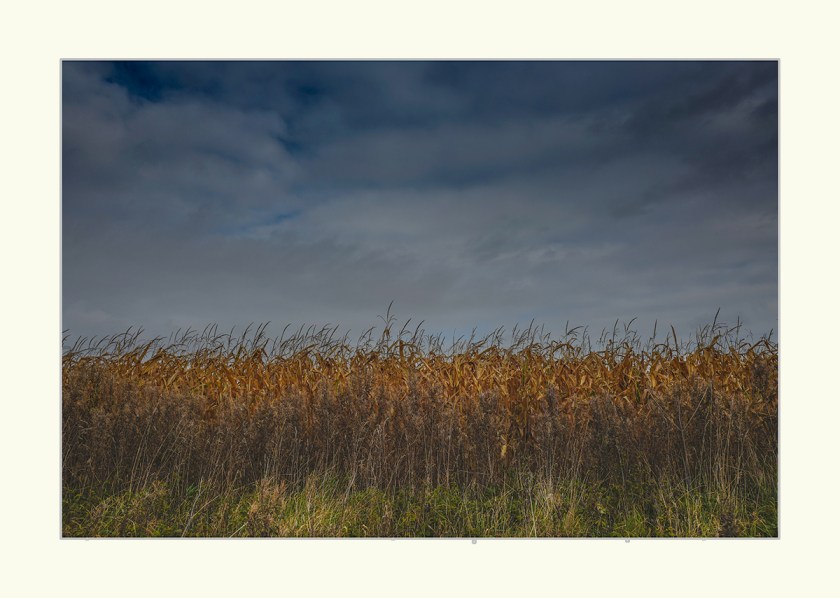
I’ve admired the work of the abstract expressionist artist, Mark Rothko for many years.
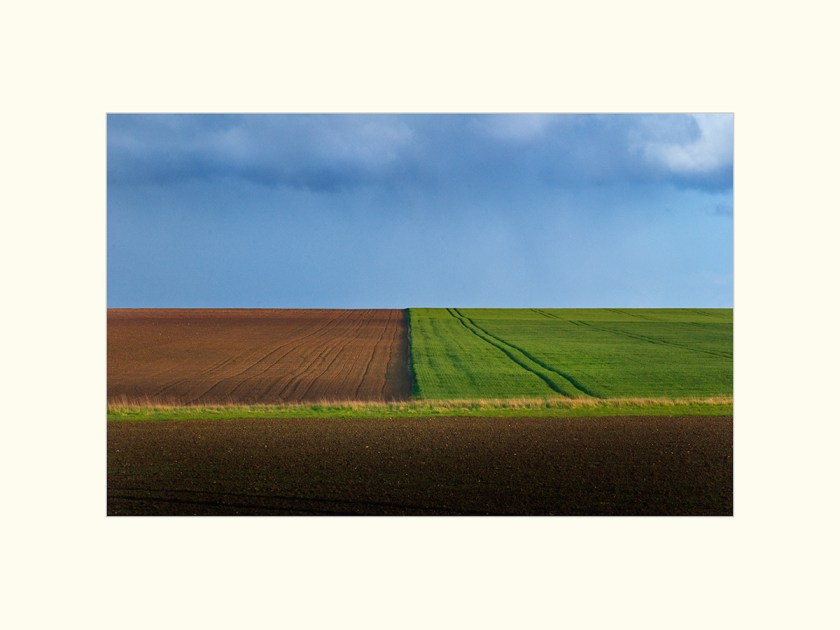
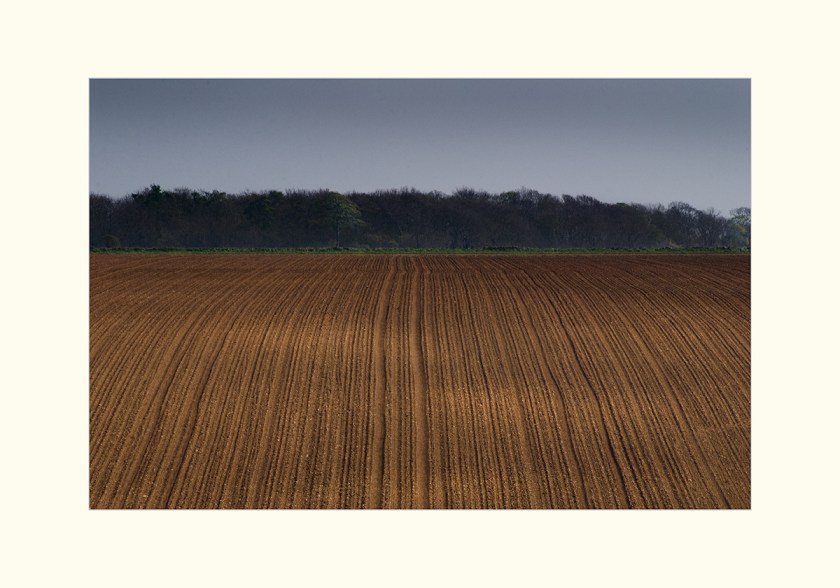
His reduction of images to blocks of colour, mainly in the horizontal plane, appeals to me.
The images are not complex; perhaps that’s the attraction.
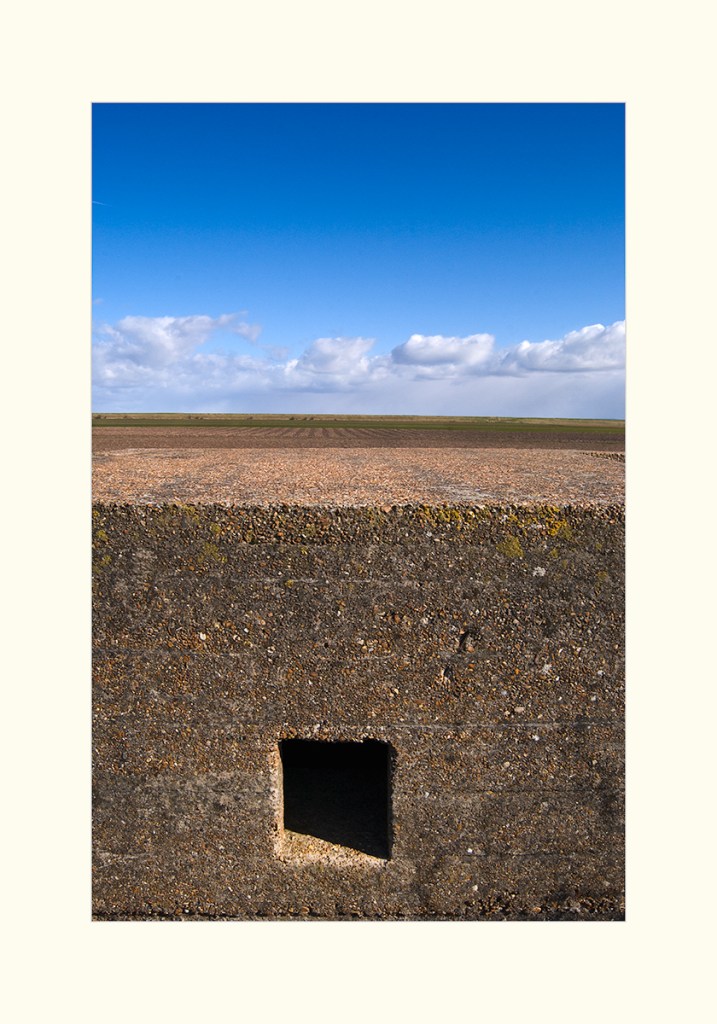
Though not specifically a landscape photographer I’ve produced many images in that genre. Most early pieces of my work are picturesque, over-sentimental, touristy pieces, but over the past 20 years, I’ve been attracted to stripping down the image, Rothko like, to bands or blocks of colour.



Title: Small Town Inertia.
Photographer: J A Mortram.
Essays: Lewis Bush. Paul Mason.
Poem: Jamie Thrashivoulou
Reference: ISBN 9781908457363
First published: Hard back 2017 by Blue Coat Press, Liverpool
Website: smalltowninertia.co.uk
Size:310mm x 215mm x 20mm
Jim Mortram, the master of the Long form of photo story, has released his first book. I’ve known Jim Mortram for a few years and all the while he’s been building up to producing this book; closely working with his community in and around his hometown in Norfolk.
Jim’s output is reminiscent of others who have chosen to highlight this sector of our community. The disadvantaged and the disabled.
He is following on* from others like:
Bill Brandt, who in the 1930’s produced hauntingly beautiful images in the East End of London, the North East of England, and Yorkshire. Much of his work was published in the excellent Picture Post in the 1940’s.
Nick Hedges photographs of the poor taken for ‘Shelter’ in areas of deprivation around the UK in the 1960’s and 70’s. About his work Hedges said…
‘Although these photographs have become historical documents, they serve to remind us that secure and adequate housing is the basis of a civilised urban society. The failure of successive governments to provide for it is a sad mark of society’s inaction. The photographs should allow us to celebrate progress, yet all they can do is haunt us with a sense of failure.’
Sir Don McCullinwho’s work in Bradford, shown in his book ‘In England’ highlights the condition of the disenfranchised.
And yet Jim’s work is different. Those excellent photographers were able to walk away. No matter what pain the images they took inflicted on each of them, they went home at night, away from the abject misery they pictured. Away from the districts the impoverished lived in. Away from the conditions they had experienced that day.
This excellent photographer, Jim Mortram does not. He lives in the community he photographs. Being a full time carer for his mother, he experiences first hand the grinding oppression of the careless state on those less able to care for themselves.
His view is long term. His view is personal. His view is compassionate.
And it shows.
Buy it and read it.
Peter Barton
October 2017
*it’s a sad reflection that we need people to ‘follow-on’ to highlight the plight of the disadvantages in this country. Governments should be ashamed.
(my apologies to any photographers I have not included in my short list)
The order of things in Britain has changed over the last few years. It has changed at a pace unlike any I’ve seen in my life. Or, does it just seem to be changing faster because I’m getting older? I can’t tell. I can only view the pace of change from my own perspective, distorted or otherwise.
Many of our institutions we once thought rock solid have gone or changed so they’re no longer recognisable. It’s inevitable, I suppose. Change has altered much of the fabric of our society, none more so than the media. The BBC, long regarded as the bastion of independence and autonomy seems to have buckled with its new apparent right leaning bias.
The Newspaper industry, always powerful, now seems to have gained a renewed influence as its many independent elements have coalesced around certain powerful individuals. It wasn’t always like that.
Britain has a fine record of independent newspapers dotted around the country. The Stamford Mercury, for example, Britain’s oldest continuously published newspaper title having been running since the early 1700’s. The paper remains in print today.
Over the last few years, many established daily local newspapers gave up the ghost entirely or shrank to a weekly, full of advertising and with few real stories. Pale spectres of what they once were.
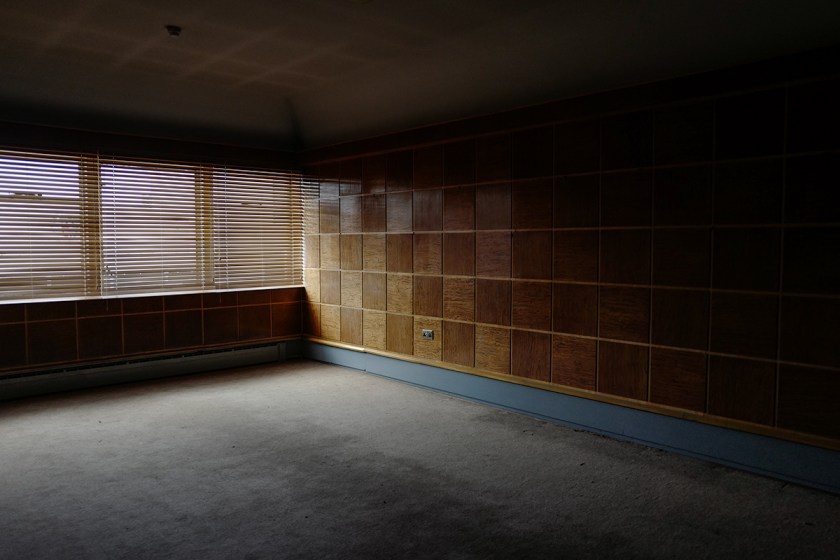
One such is what was known as the Coventry Telegraph. With, in its heyday, around 600 staff, including upwards of 200 journalists and photographers. This was the premier newspaper for this thriving Midlands industrial city from 1891 when the newspaper, then known as The Midland Daily Telegraph, was founded by William Isaac Illife.
The foundation stone of the ‘New” headquarters was laid in late 1957 by the then proprietor, Lord Illife G.B.E. And the building remained much the same until printing ceased there and the building fell out use.
The building remains on Corporation St Coventry to this day. Standing empty. A sad reflection of what it once was, with a boardroom and Lord Illife’s personal flat and staff quarters on the top floor with their delightful 50’s, currently chic, style. Offices below and largely gutted print works and reception area on the ground floor.
The building is set for conversion to a boutique hotel in a year or so. Meanwhile, it stands testament to it once being a part of an industry now unrecognisable to those who worked in there many years ago.
Long gone are the days but in my mind’s eye I can see and still hear the newspaper seller in Birmingham crying ” ‘spatch-a-mail” ( Despatch and Mail the names of local newspapers at the time). But being here, in this building brings it all back.

Meeting room

Bathroom of Lord Illife’s flat.
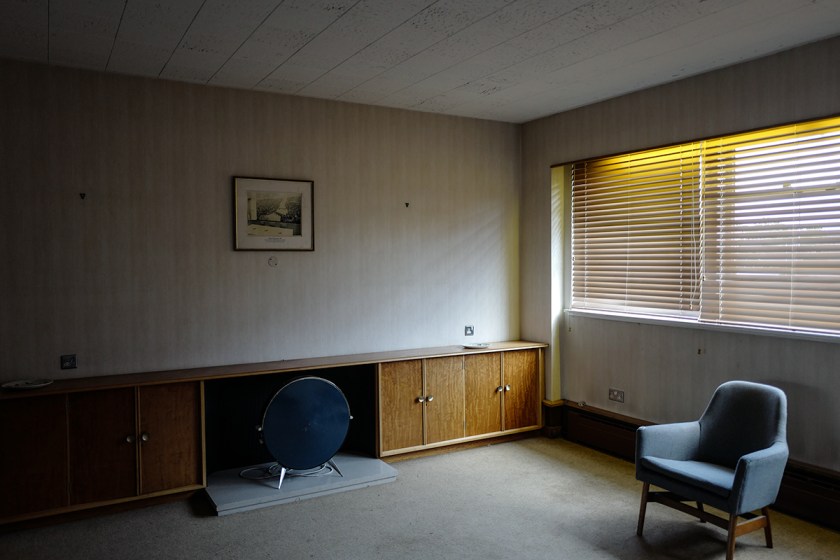
Sitting room in The flat.

Stair well

Managing Director’s office
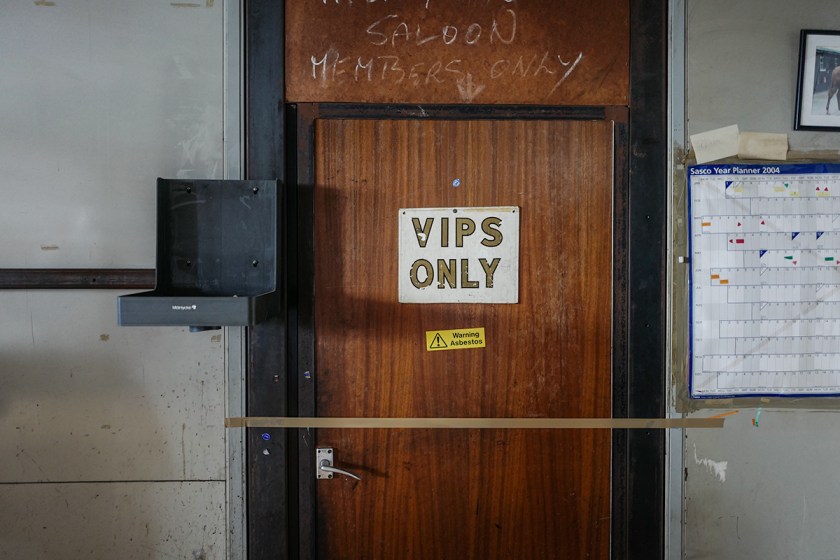
On the Print floor
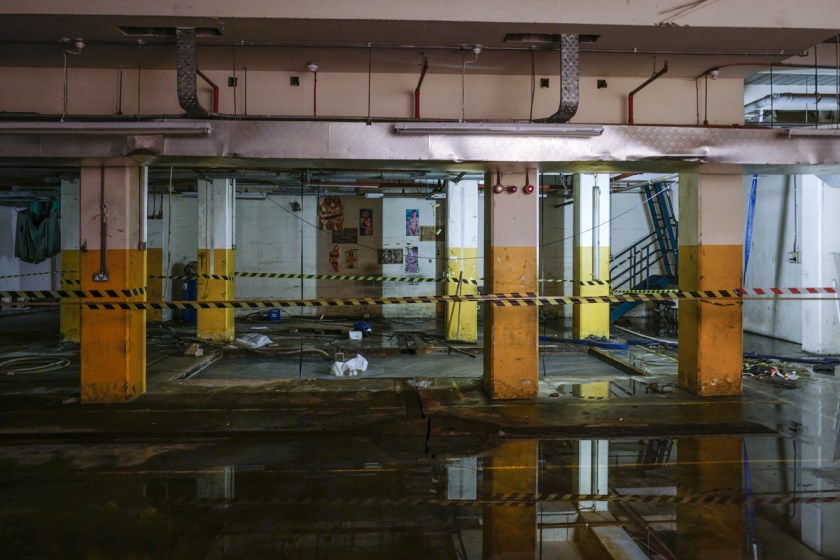
Where machines once would have stood

A nod towards Citizen Kane in the print rooms
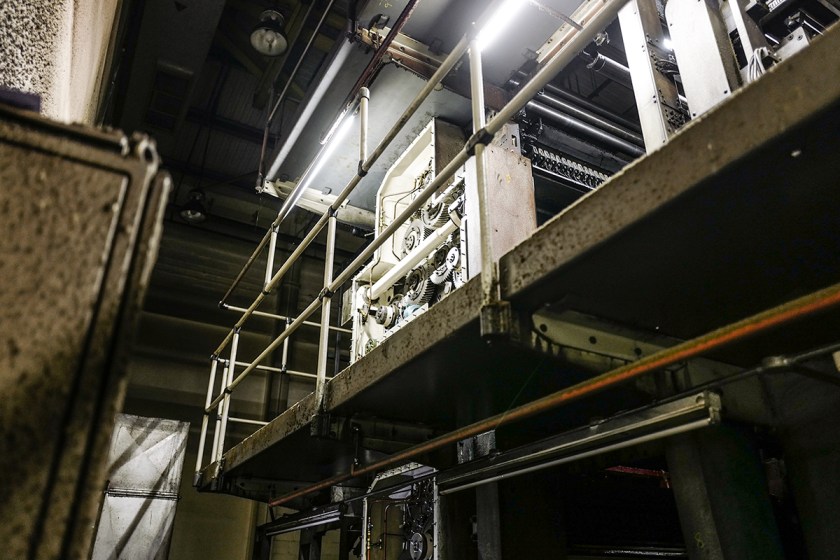
Remains of a Printing Press

The reception area. The public interface.
With a lot more than just a nod to the title, these images were inspired by the work being carried out by fellow photographer David Barrett (@streetphotouk) who publishes this genre of work under the hashtag #ukcloseddoors over on Twitter.
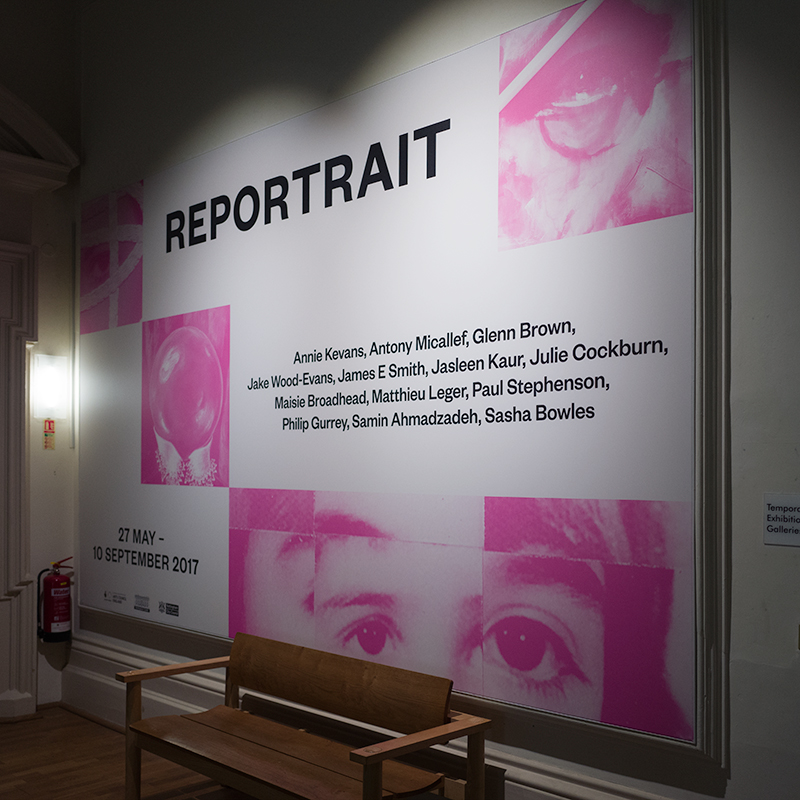
Today I traveled a few miles to Nottingham to view the ‘Reportrait’ exhibition at Nottingham Castle and Art Gallery.
I have an interest in portraiture. I like to see the works however they were created. Whether they have been made by hand or captured through a camera’s lens they fascinate me.
The last exhibition of painted portraits I visited was many years ago at the National Portrait Gallery.
Things evolve, fashions change, new artists appear, so I was unsure what to expect.
Not only were there examples of work made by hand using a range of drawing or painting implements, but there were photographs, 3D plastic busts and…well… just so much to involve the interest and curiosity of the observer.
I can’t speak profoundly about the art works. The contextualisation of artwork is beyond my limited grasp of fine art. Mine is a simplistic, visceral reaction to each of the works. I employ little or no intellect in my artistic appreciation I’m afraid. They move me, or they don’t.
However, even from that simplistic standpoint the exhibition is well worth visiting.
I was particularly drawn to the work of Maisie Broadhead. Her’s is a mash up of classical imagery from the likes of Vermeer, Hogarth etc which she reproduces photographically with three dimensional, real objects projecting past the frame.. Not only is the photographic work excellent, but that overlap between imagery and reality is both unnerving and fascinating.
Similarly the work of Philip Gurrey demands attention. Strong images, heavily painted, deformed portraits even. I loved the work.
The tour-de-force, at least so far as effort is concerned, must be the 500 piece collection of images by Samin Ahmadzadeh. Powerful as a collection and fascinating in their individuality.,
As you can probably tell, I enjoyed the exhibition of work. It seemed fresh and exciting as a curated collection and, like Samin’s work, each singular element in its makeup was fascinating it its own right.
It is a must go show.
The exhibition ‘Reportrait’ is open 27th May to 10th September at Nottingham Castle.
The exhibition comprises work from:
Annie Kevans, Anthony Metcallef, Glenn Brown, Jake Wood-Evans, James E. Smith, Jasleen Kaur, Julie Cockburn, Maisie Broadhead, Mattieu Leger, Paul Stephenson, Philip Gurrey, Samin Ahmadzadeh and Sasha Bowles.
More information can be found on the website here…
n.b. I have provided no images of the artworks themselves for copyright reasons.
Here in England, we drink a great deal of tea. It’s drunk throughout the day by much of the population.
According to the UK Tea and Infusions Association, the British consume 165 Million cups of tea a day (60.2 billion cups a year). By comparison, 70 million cups of coffee are consumed daily in the UK.
The title of World champion tea drinkers (by head-of-population that is) goes to the Republic of Ireland. Great Britain is the 2nd largest consumer of tea.
The largest producer of tea is China with an annual production of about 2.2 Million tonnes, with India next, producing just about half that amount.
As tea is drunk so much here in the UK you would think we would know all about it. Judging from my own lack of knowledge that isn’t so. For example, tea – Camellia Sinensis from which tea is obtained- is a small tree*, not a bush as we would have thought. And, it’s so rigorously trimmed by plucking the leaves it could almost be considered a Bonsai ( though, unlike bonsai no root trimming takes place).
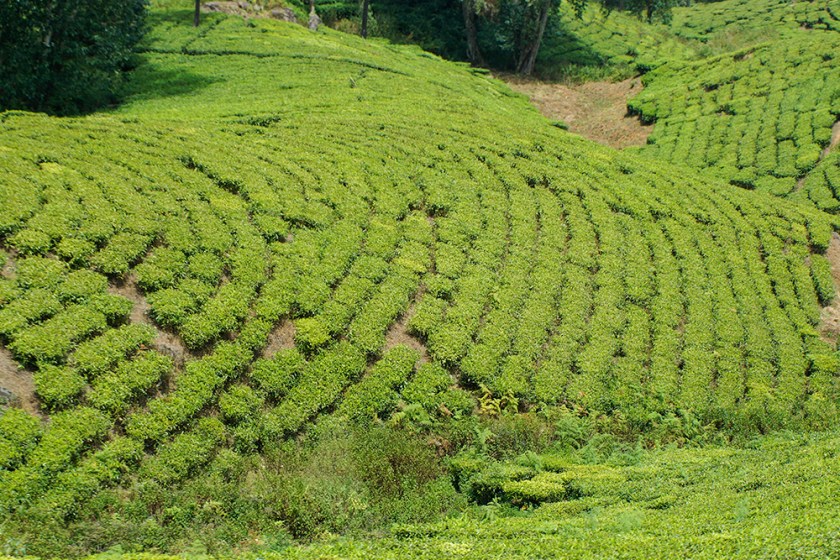
 Whilst in India we made a visit to a tea plantation high up in the Nilgiris Hills at Coonoor. Up here at around 6000ft above sea level, the air is cooler than on the plains below. As you climb up to the hill stations the landscape is full of plantations. The land looks for all the world like it’s been cultivated by mad English gardeners who have lovingly tended and trimmed their privet hedges ( that shrub so beloved of the English). Between the rows of the growing tea, tall trees are planted to provide shade from the strong sun. The overall appearance of a tea plantation is one of heavy cultivation. There’s nothing natural about this landscape, apart, that is, from the steep slopes of the vertiginous terrain.
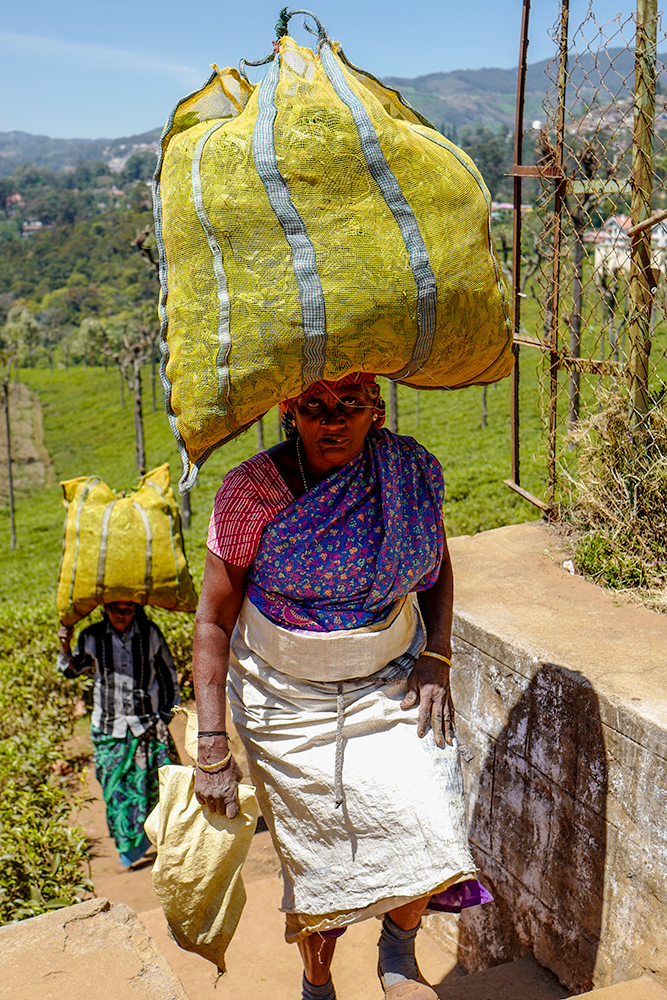

Those steep slopes are difficult to walk up even without carrying the 25kg bags of leaves the pickers carry on their heads. The air is less dense at these altitudes making breathing a struggle, particularly for those of us who live in the dense air at sea level. Watching the tea workers you cannot help but admire their strength and stamina.
However, we haven’t picked the tea yet. How is that done? That depends on to whom you listen. The owners of the more “tourist” type plantations would have you believe it’s all picked by hand. However, when I spoke to a plantation owner who was at a friends house we were visiting he told me that was very much “for the tourists”. Apart from the ‘white tea’ – the new, fresh leaves which are hand-picked which reflects in the price – most tea on large plantations is picked with something akin to a hedge trimmer with a collecting basket. That perhaps explains why we were not allowed to see the actual picking process on the estate we visited.
Nevertheless, everything else seemed to have a heavy reliance on human effort.
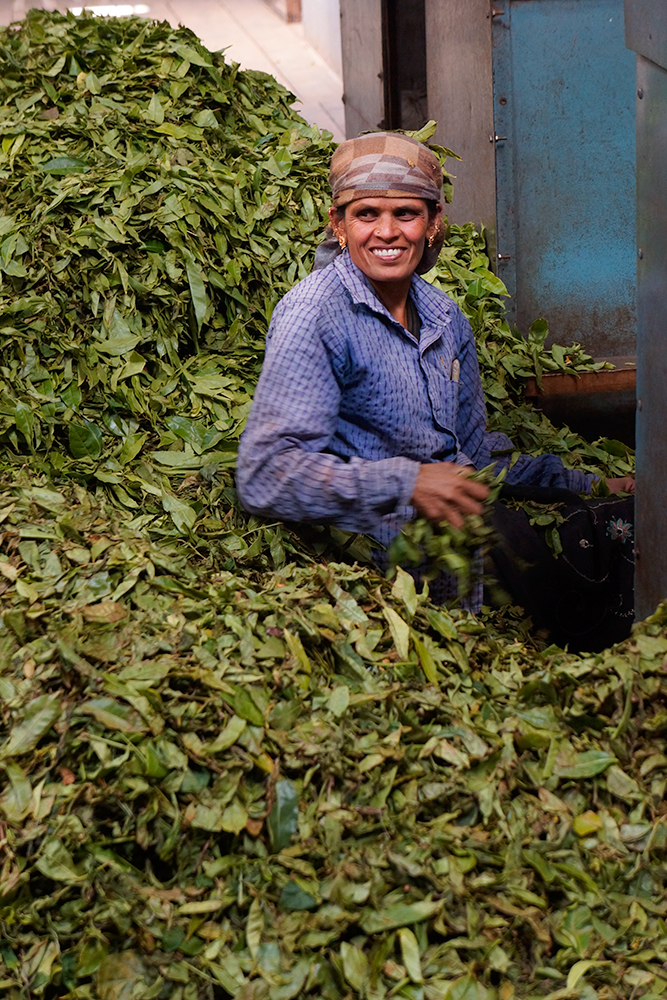
©Sue Naylor 2017
I don’t know why, but I was surprised at the size of the tea leaves 50mm – 100mm long. You can get some idea of the size in the picture above, where the leaves are being made ready for drying. I expected them to be smaller.


©Sue Naylor 2017
 Tea is processed in factories on the plantations. Initially, the picked leaves are left to wither in the warm air of the factory. This process lasts anything up to 16 hours, after which the withered leaf is broken by machine. Tea which is to go for quick brewing use, tea bags etc., is processed in machines which Cut Tear and Curl (CTC machines). Other leaves are simply rolled. Either way, the leaves are laid out on trays for up to 4 hours to oxidise during which time they turn a golden brown colour.
After oxidisation, the leaf is passed through dryers or heating chambers where the moisture is removed and the leaf turns the familiar dark brown or black colour we all know. After this process, the hot, dry tea is sifted through mesh screens and sold through brokers to the large tea processing companies Tea tasters and blenders are employed to ensure we always get consistency in the finished product.
Speciality teas, like Green tea, Oolong, white tea and compressed tea (bricks of tea made for Chinese and Japanese markets) are processed differently but essentially they all come from the same source.
All of this processing produces a smell in the factory. It reminded me of my childhood. With the use of tea bags, we don’t seem to smell tea today. The smell took me back to the much-used teapots of my youth. Heavily stained, never cleaned, they smelled like tea and that’s the smell which filled the factory.
To get your daily cup of tea to your table takes the work of many people, Some of it hard manual work usually carried out by women who do not get paid much by western standards for their labour. Next time you have a cup of tea think of them and thank them for their efforts.
*There is no connection with the trees which make tea and tea tree oil. Tea tree oil -that’s the New Zealand Tea Tree – Leptospermum scoparium.

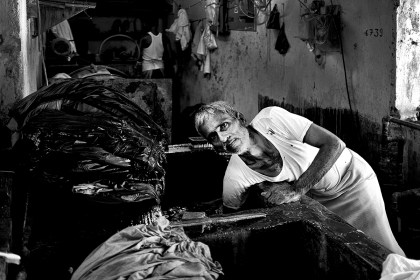 One thing immediately noticed when in India is, no matter how relatively poor the people are their clothes are clean and bright. Rarely do you see people wearing dirty or even unpressed clothes? How is this achieved in a country where the use of washing machines, though growing, is very rare? The answer, of course, is the same way it has been achieved for hundreds, if not thousands of years. The dobhi washerman is the man instrumental in the process of keeping India clean.
 Hundreds of thousands of these workers exist all over India hand washing clothes all day. It’s a grueling task in the hot sun, often up to their knees in water, these workers soap, scrub, soak, rinse, wring and dry, – and even press with coal-fired irons – the full range of clothes for every type of household or business. Even the higher priced hotels seem to use this services, as marks inside my collars seemed to show when they returned from the ‘hotel laundry’.
 On top of the long and hard hours of work, there is the logistical nightmare of handling so many clothes from different origins at the same time – and ensuring they get back to the clients.
We visited one such washing area in Mumbai. The area is known as the Dhobi Ghats. Hundreds of stone cubicles, built by the British, are full of men beating the clothes clean. Human washing machines, cleaning up to 100,000 items of clothing every day.

A washing machine in the Dhobi Ghat
There are said to be 5000 men occupied in this trade in Mumbai alone. And yet, even here, there is the odd industrial washing machine. With the ever increasing affluence of the Indian middle class, the use of washing machines is growing.
The decline of the Dhobi, and similar trades traditionally carried out by hand raises concerns for the working man in India. With the rush to modernism and the consequent loss of jobs, just where is India’s massive population going to work. There is a delicate balance to be made on this tightrope between modernising a society and the consequent job losses.

A Sadhu is a Hindu holy man. Typically, as here, pictured in Mysore, dressed in saffron coloured robes they wander the country living on alms.
Having renounced the normal pleasures of life, or denying themselves material satisfaction, they follow a mendicant ascetic life – tapasvee in Hindi – dedicated to spiritual goals.
There is a more radical sect of Sadhu, the Naga Sadhu, who wear no clothes, simply choosing to cover themselves with ash and beads. They rarely appear in public choosing special events like the Kumbh Mela to do so.
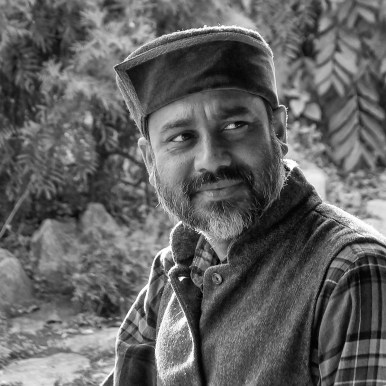
Abhishek Madhukar. Picture ©Sue Naylor 2017
Abhishek Madhukar, a photojournalist, and filmmaker based in Dharamsala, Himachal Pradesh, covered the last Kumbh Mela and produced a video on the Naga Sadhus for the New York Times. You can see it here…

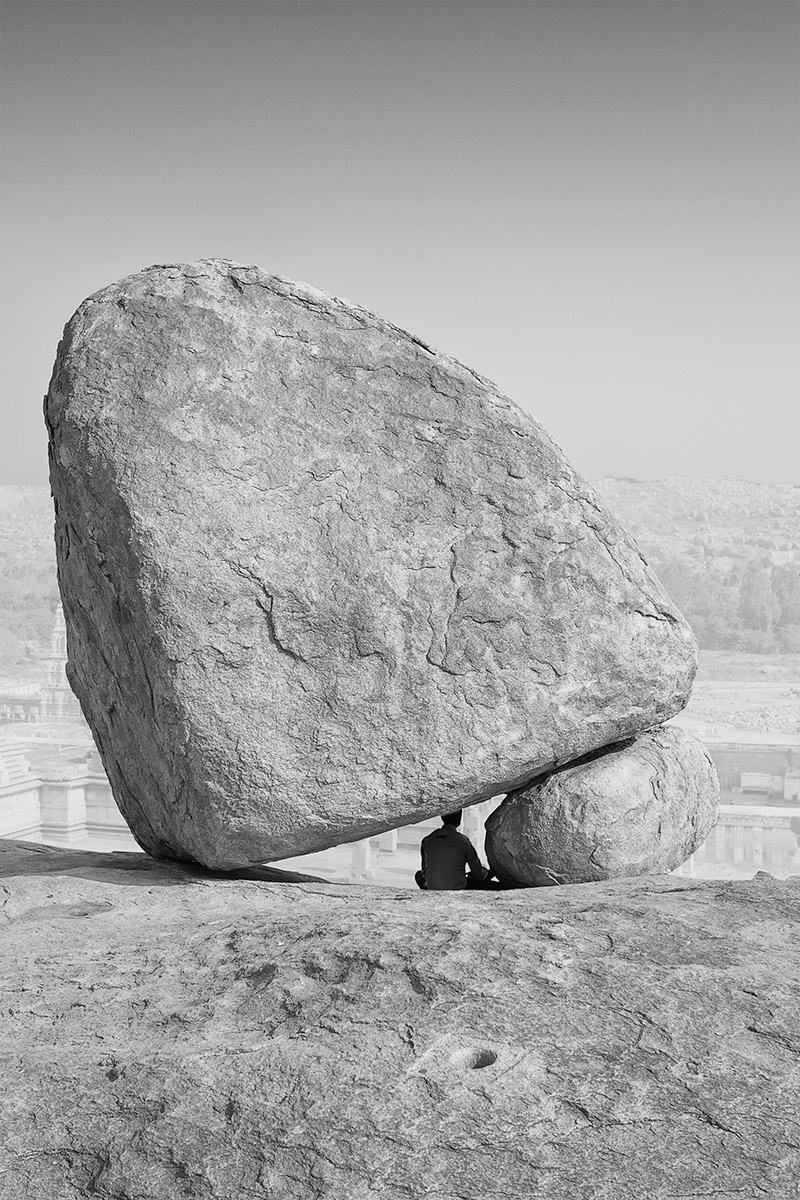
What a place! If your ‘gob is not well and truly smacked‘ by this place then you have no soul.
The natural landscape is strewn with huge granite boulders, some piled precariously atop one another, some say, they have been there for thousands of millions of years, formed by the ancient tectonic plate movements of the earth’s crust. It’s certainly a landscape which dwarfs the visitor, not only in scale but in time.
It’s also been a natural quarry for the indigenous people for many centuries. Working with the hard crystalline granite – not an easy task I’m sure – artisans and artists first quarried the stone by splitting boulders – you can see evidence of this all around. Boulders with pockets chiseled in line litter the area. It’s said these pockets were filled with balsa wood which was soaked with water. The expansion of the wood split the stone. The boulders were then worked to produce exquisite objects, some huge in themselves, and elements for building construction.
There is much to see in Hampi but, for me, it’s the startling juxtaposition between the huge, natural landscape and that which ancient people constructed from it which captures me.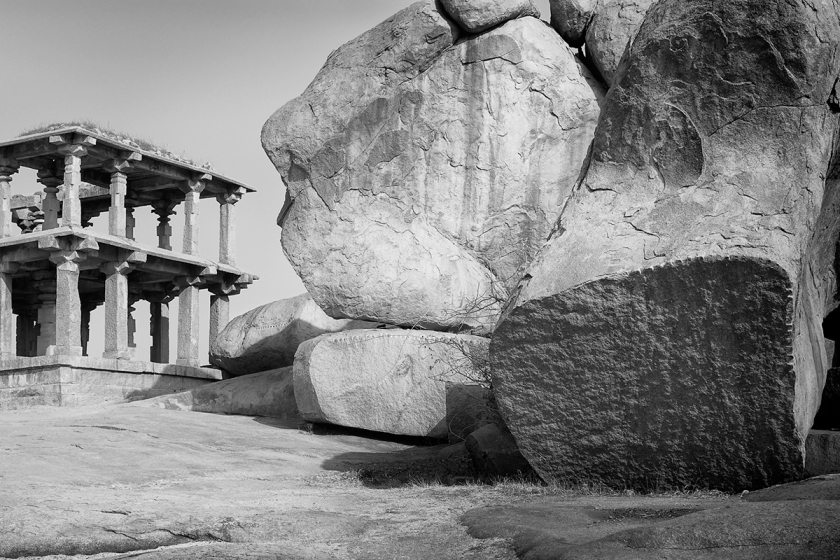

McLeod Ganj, high above Dharamshala in the state of Himachal Pradesh, India is the home of the Dalai Lama, the spiritual leader of the Tibetan school of Buddhism.
His Holiness escaped across the Himalayas to this region of northern India following the failed Tibetan uprising against the Chinese in 1959.
The Dalai Lama lives in a monastery in this small mountainside town on the edge of the ever present snow-capped foothills of the Himalayas which set an impressive backdrop.
Part of the ritual adopted by Tibetan Buddhists is to ‘circum- perambulate’ the temple on a daily basis. A path has been built on the vertiginous slopes around the temple to facilitate this activity. It’s no mean feat. The inclines are steep and at nearly 7000 feet above sea-level, the air is thin for people not used to this altitude.


His Holiness is in residence and is teaching so the town is bustling. McLeod Ganj normally attracts visitors from around the world, monks, mendicants and just the curious. But, when there is the opportunity to see His Holiness and hear him speak… you can imagine the activity level in the town increases.
Setting off from a favourite coffee shop (Moonpeak Coffee – with the best Cafe Latte she has ever tasted, claims my wife Sue Naylor) the town is busy. Surprisingly though the path is quiet. Perhaps everybody is in the temple listening to His Holiness.
Dotted along the path, seats are positioned on which to rest and over 200 prayer wheels of various sizes exist to spin your prayers to heaven. Prayers are carved in stone and left around the path. Small stone cairns have been built along the edges of the path, a physical testament to the passing of many thousands of feet and to the beliefs held by the pilgrims. The sun is warm A street dog lays sleeping on the path. His head coloured red for the Hindu festival of Holi.


You find yourself sharing the path with sacred cattle, street dogs, monks, beggars, and troupes of monkeys cross the path as well as other pilgrims making their slow way around the temple.
Oh yes… about Gandhi.

The Dali Lama and Gandi in the back of a truck at the start of the walk.
 peterdbarton.com