This image is of a dolls head sitting on the floor of a derelict house. Derelict houses have always fascinated me. Who lived there? What did they do? Why did they go? It’s about the ghosts of those who have gone before.
During my life there have been a couple of opportunities for me to gain access to old properties. Firstly when I worked in the building industry in Birmingham. It was in the early 1960’s. At that time Birmingham was clearing its inner city slums (I was born in one such in Nechells near to the Gas works). Thousands of Victorian houses were being cleared and being replaced, arguably with modern versions. That aside, I had access to houses that had been swept away, though their cellars were still available to me. On a site in Curzon St., we were building a Centre for Public lighting* over what was once rows of early 19thC houses**. Much of was once the superstructure had just been dumped in the cellars we were digging through. In thre cellars of a demolished house in Summer Lane, Newtown, we discovered thousands of unfinished Mother of Pearl buttons and the shells from which they were being punched – obviously a button factory. Secondly when I worked as a Property Surveyor in Leicestershire, Bristol, Bath and Birmingham. Every day I would be asked to inspect an empty house somewhere, though in the main they were not totally derelict. I saw some amazing houses, from rows of ex miners cottages with tin baths in the kitchen for bathing to the grandest houses with dozens of bedrooms and bathrooms and vast cellars. It was only later in life I started taking pictures of derelict buildings.
Notes on above *Itself knocked down in my living memory to be replaced with the Museum in Curzon St. Yes, Birmingham really does change that quickly.
**it wasn’t until nearly 60 years later that I discovered my Great Grandfather had lived in those very houses.
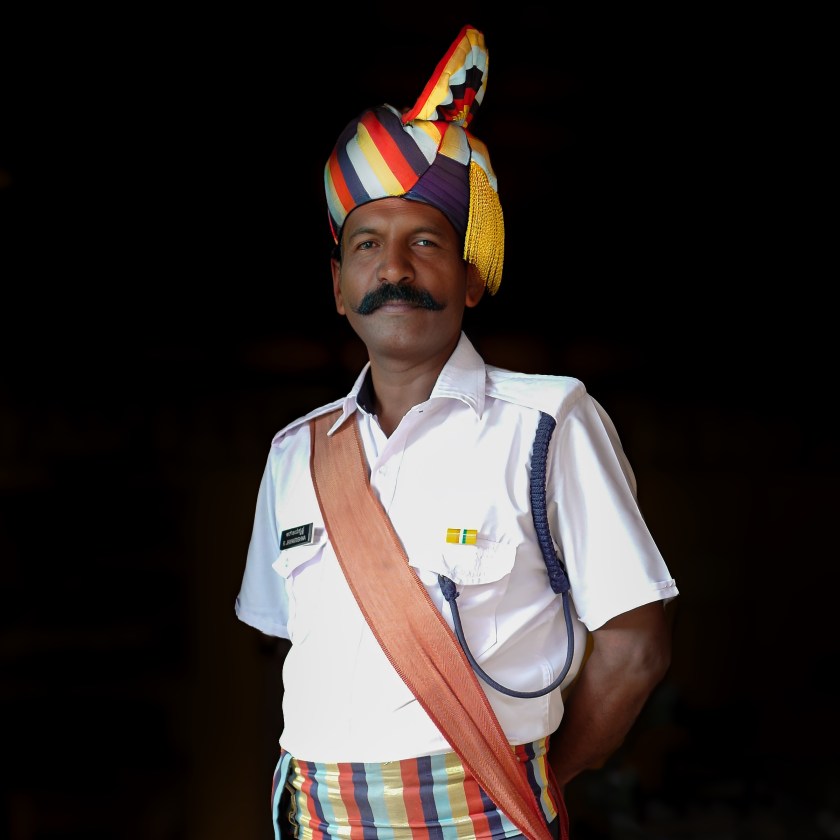
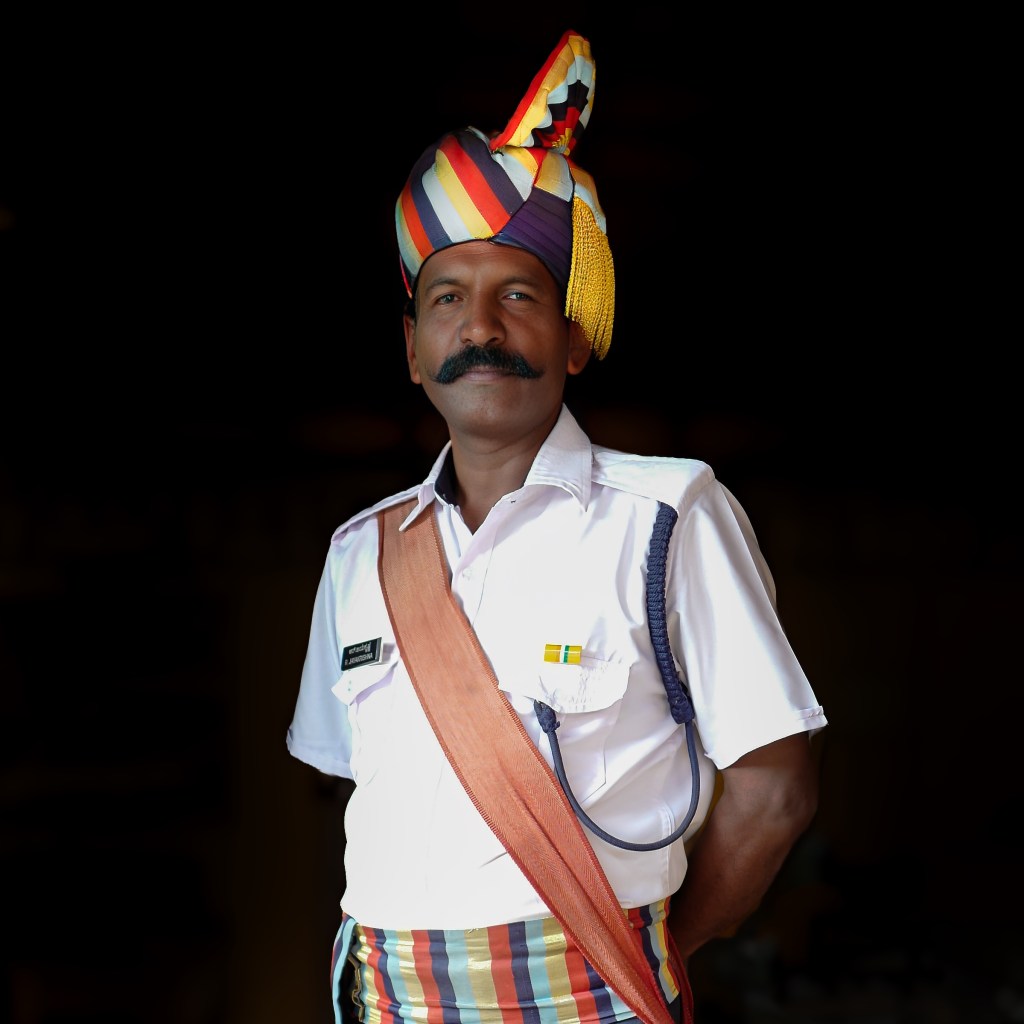
This man, the doorman in an hotel in Karnataka, India, is ex-Indian army and it shows, One of the people we were with was ex-British Army and saluted him in military fashion. The doorman saluted back. Afterwards, they greeted each other warmly. I asked if I may take a picture. He agreed. I posed him and this was the result.
A few weeks ago we were notified by Anglian Water we had a water leak and that we had a month or so to fix it, or else.
We investigated inside the house. Nothing was found. No leaks at all. Everything was dry. We called the number on the e-mail and a really helpful chap arrived from Anglian Water to see if he could find the leak externally saying “It may be the connection between your house and our main”. Reassuringly adding “in most cases it is”.
He called in an “Emergency team” to dig up the pavement around the stop tap point where we are connected to the main. They came, they dug and found the connection to the main was not the problem. At the same time they upgraded the connection point to their main.
It’s worth mentioning here: 1. Anything in the pavement is their issue not the householders.
2. Anything from the back of pavement into the house is the responsibility of the householders to fix.
Hmmm that sounds expensive we thought.
Anglian thought the leak was small, just a few hundred litres a day. Small! That seemed like a lot to us. (b.t.w. it got worse)
We had a number of very helpful employees from Anglian Water come to visit us to explain what the problem was and advise us how it may be fixed.
Many older houses would have had lead piping providing the connection between the house and the water main under the footpath. Our house built in the 70’s had a black plastic pipe made from Alkathene, lead having been phased out long before. According to the various employees from Anglian Water who visited us these older Alkathene pipes are notorious for splitting and leaking.
But how does the plastic pipe get from the side of the road to our internal stop tap which was underneath the bath in the centre of the house? Where had those 1970’s builders ran the pipe? We suspect it had been placed under the floor slab during construction. This would make replacing the Black Alkathene with new plastic piping nigh on impossible. Hmmm. (B.T.W. We live in a bungalow so everything is at ground level).
What about paying for this? Can we claim it on insurance? It transpires you can claim for a repair to the water supply but not to replace it. Yes, I suppose we could have had the position of the leak identified and just had that piece “repaired” under the insurance policy. However, the pipe having failed once is likely to fail again. Replacement seemed the proper answer.
The best piece of information given to us by one of the Anglian Water team who called on us was “Our feed does not have to be connected to the position of the old stop tap. It can be connected to any of the cold water pipes in the house.” We didn’t know that. For us this meant we could allow the feed to come to the front of the house. Our plumber could then take it up into the roof and connect relatively easily to the cold water system in the roof.
What this meant is we needed a relatively short run of excavation between the pavement and the house, just over 6m.
N.B. It is a legal requirement to have the pipe buried to a depth of 750mm or more (For frost protection).
This excavation would have to go across a lawn, through/under low brick edging to the lawn and then through block paving. I did not relish digging this myself. I’m far too old for that.
It was suggested we could have this “Moled”, that is where a pneumatically powered mole could provide the connection between pavement and house wall, with minimal disturbance. We were sceptical. After some research we discovered a local Lincoln based company specialising in this type of work.
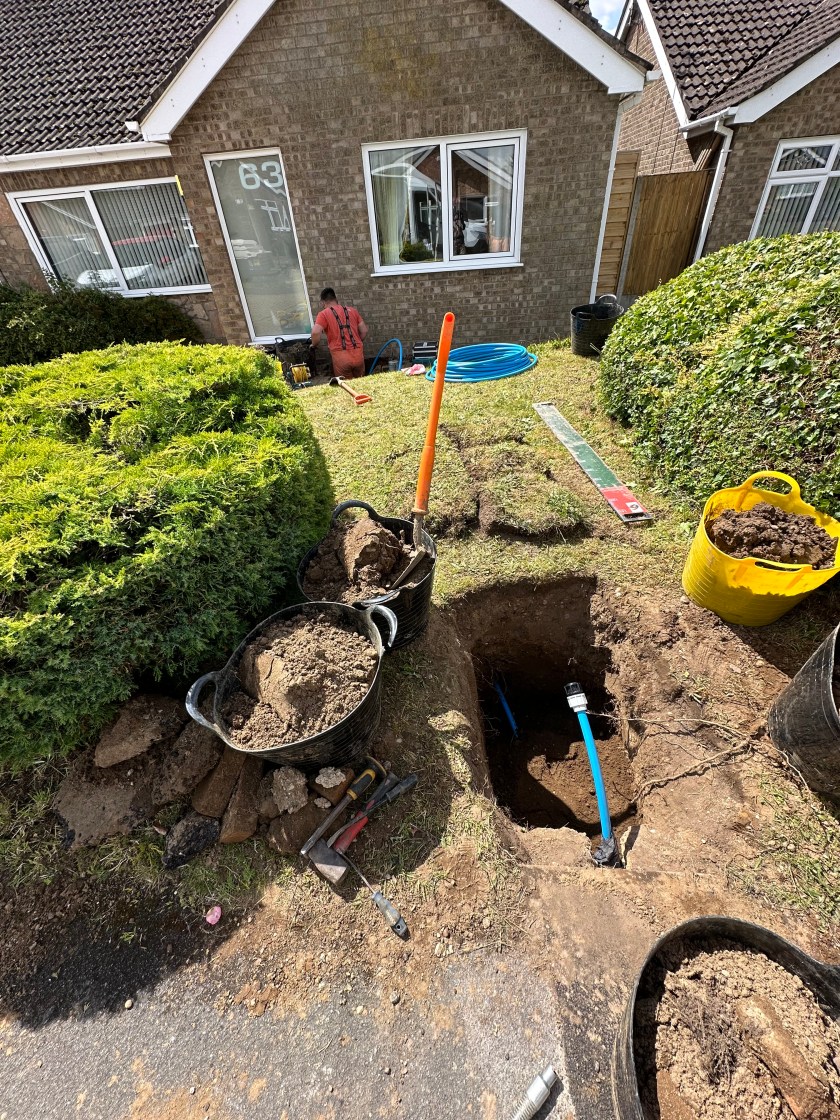
They started by hand digging 2 pits. One at the water main end of the proposed run and other at the house end. These pits were about 750mm square and were to the required depth. Next, the Mole was made ready and targeted, aiming from one pit to the other. The air compressor was started and the Mole was set on its way underground between the pits. It didn’t take many minutes before the Mole appeared in the target pit, in the right position. The Mole was removed and the new water pipe was pulled back through the hole it had made.
See foot of page for 3 videos of the Moling process
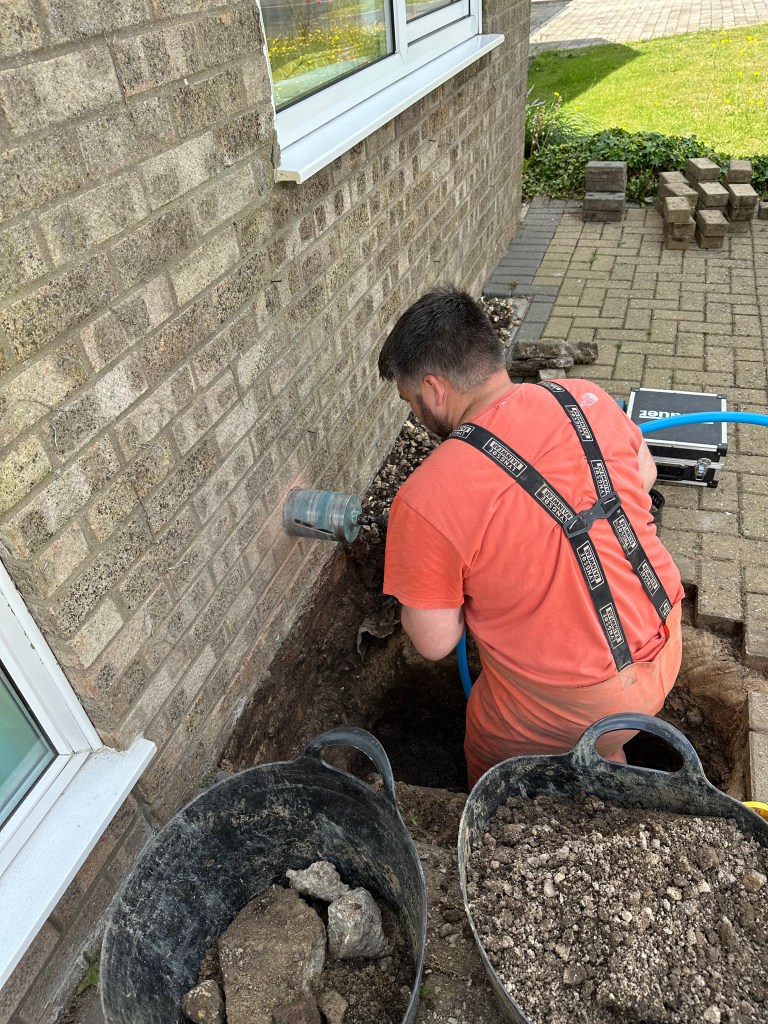
The same company then drilled the wall of the house just above floor level. You can see the new supply blue pipe inserted after the Moling process, ready to be connected.
In order to comply with insulation requirements the new water supply was then contained in a proprietary insulated box from the base of the trench up to the newly drilled hole. (n.b. the hole is 100mm dia so as to allow for the new pipe to be insulated as it passes through the wall to the inside of the house.)
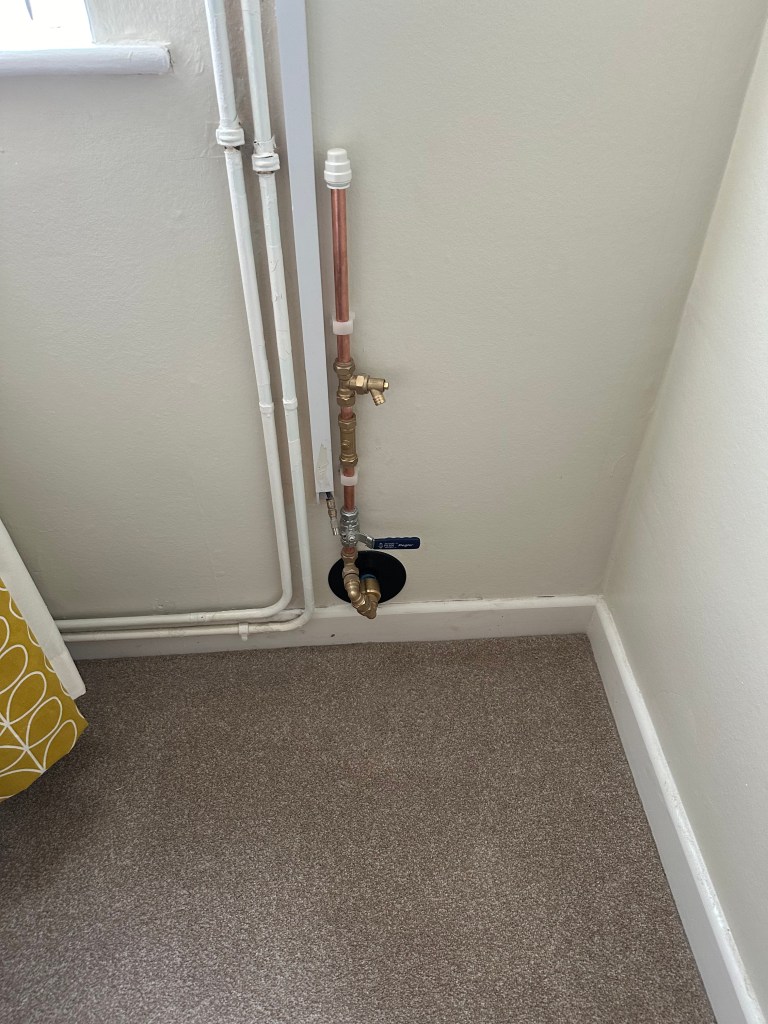
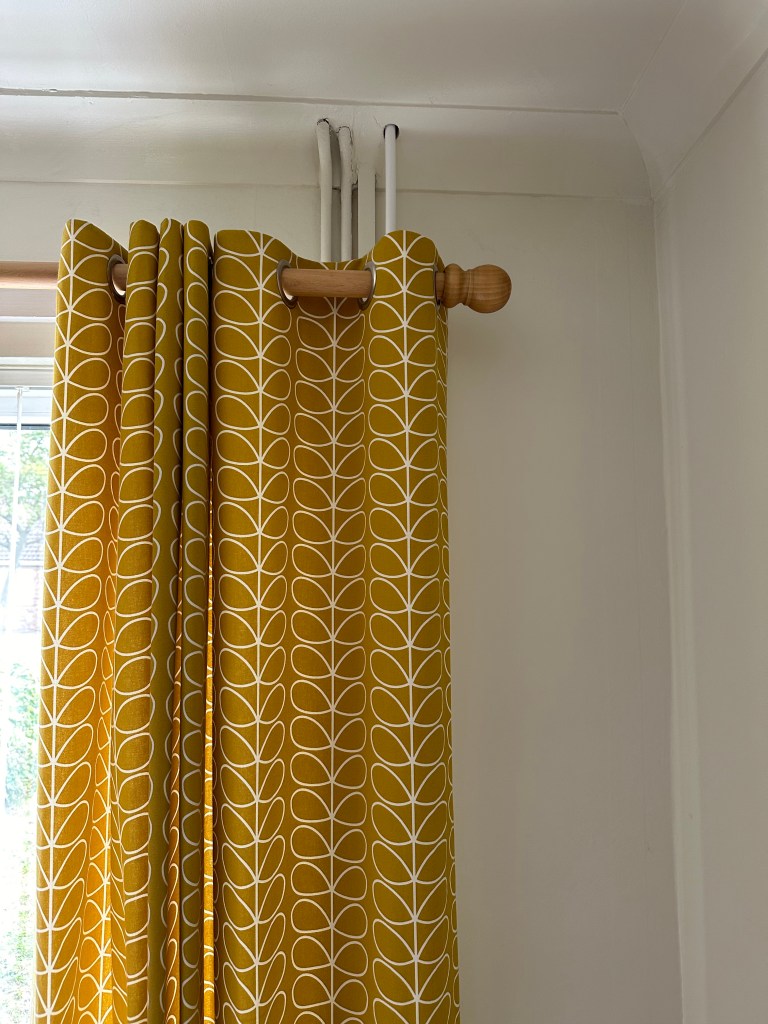
Once inside the house the new pipe was terminated with a stop tap, a non return valve and a drain tap, all of these are required by the Water Authority. A tail was left for our plumber to connect to for the internal works. Once connected to the internal plumbing the long curtains we have in that bedroom covered the pipework.
We cannot speak highly enough of the assistance we received from the representatives of Anglian Water who dealt with us before, during and after the works. However, we reserve our highest praise for the team from SR Water & Civils whose work was simply exemplary, even down to the restoration of the block paving they had to remove for one of the pits to be dug. Simply excellent.
Now, a few weeks on from the start of these troubles, we have a new water supply to the house, our plumber has made the internal connection, clean fresh water is flowing, we don’t have large tubs of water sitting in the bath (for when supplies needed to be disconnected) and we are not wasting nearly 3000 litres of water per day caused by the leak.
Our thanks go to:-
Anglian Water Leaks Team
S R Water & Civils for installing the new pipework and the rest of their excellent work. Contact details:- SR Water & Civils 26 Gloucester Close Bracebridge Heath Lincoln LN4 2TB 07961 158487
James Morley our long suffering, and long term plumber (James has worked with us 27 years now) for the excellent internal plumbing on this replacement water supply project.
A few sundry images of the aftermath – from left to right…
1. The new tail of blue pipe ready for Anglian Water to come and make the connection to the main. 2. The top end of the box containing the insulated pipe. 3. The relaid block paving. You wouldn’t know they had been. 4. Our existing curtain hiding the internal works. 5. The new plumbing connecting the new works to the existing cold water pipes in the roof. (right hand pipe)
Videos of the Moling process. After targeting, the compressed air mole is set off towards the target pit 6 metres away.
The mole now heading towards the red and white ranging pole in the target pit against the house wall.
Interested neighbours discussing the process with the contractors as the mole approaches and breaks through into the target trench. Right on target.
This image was made as part of the Meridian Project but was not originally published. It shows the East Coast just above the Humber on the Southern end of the Holderness Coast.
Co-ordinates for the image: 0° 0’22.09″W, 0015 / 53°45’47.05”N
Close to the horizon, to the right of the frame, is the Lincs Offshore Wind Farm which is situated 8Km off the Skegness coast.
The Meridian Project, entitled “A Line Runs Through It” can be seen here…
The project documents a photographic journey down the 0deg Meridian Line as it passes through Lincolnshire, after originating at the North Pole the first land it reaches is in Holderness. Captured over many days spread over 6 months, the photographer travelled the length of the 0deg Meridian as it passes through Lincolnshire, a distance of just over 70 miles.
Images of the people and places were made along the line from landfall in the Holderness area just above the Humber Estuary, crossing the Humber into the North East Coastal plain, then cutting through Louth, an ancient market town where there is a marker on shop fronts in the high Street, onwards up high into the Lincolnshire Wolds through farmland where the line passes close to ancient burial mounds, then down into the rich farmland in the Southern Fenland of Lincolnshire before crossing the border into Cambridgeshire and onwards to Greenwich, before exiting the UK mainland on the South coast.
Restricting itself just to Lincolnshire, this project did not continue out into Cambridgeshire at the Southernmost extreme of the Lincolnshire section of the Meridian Line. To read more about the Meridian see here.
Sue and I were in Roker in the North East of England recently. Whilst at dinner in the Roker Hotel we sat next to Ian Macdonald, a photographer from that area.
We got talking and Ian looked at a couple of small images on my phone. He made suggestions about the editing of the one you see here. I made those alterations. The image looks all the better for it.
Before you switch off with boredom, I don’t want to talk about the “Terminator’ effect. No, mine is a more mundane topic and one I have not heard discussed thus far in relation to AI.
As I understand AI, insofar as it relates to the production of images, is the production of a specific machine created image and is made possible by “Talking”, and I use the word loosely here, to a machine instructing it as to the type of picture you want produced, what you want included and telling it what you want to see. Sorry if I have been over simplistic here. The machine then constructs the image and delivers it to you.
I understand it uses data, i.e. images, from the vast resources of the web to make its construct. The question comes to mind; Do the AI packages pay for the use of these images to fabricate the final images? I’m guessing not. So the images are simply misappropriated, not in monetary terms, but for the benefit implicit in using those images. Afterall, if they are good enough to use for the AI company’s benefit then they are good enough to pay for. If not why not?
Let’s use this concept and take it to the next step. Say I were to take an AI generated image and re-purpose it – as in their model – for my own benefit and they were to sue me for Copyright infringement. Where would we both stand on this? I can’t see the rights they would stand on to prosecute. Afterall it would be an extension of their own business model i.e. stealing images to make their own, so suing another party for using what are afterall stolen images would seem to me to be shaky grounds for Copyright infringement.
This all begs the question Can AI generated images be called copyright at all?.
Finally, If I were to take one of these AI images and alter it slightly in a Photo editing package, would that overcome any attempt to sue for Copyright infringement?
I use the logic here that I am using a package to alter a picture – Just like the so called originator of that image used a package to alter an already existing image to arrive at their outcome.
How could one of these be right and the other wrong?
One could argue that my human guided, ‘hand made’ alteration has more copyrightable virtue as it would relate to me, a human and an individual in Law, the author of that finished image.
I look forward to seeing the results of the first case.
n.b. I know nothing about the law, as I have manifestly demonstrated above. These are just questions.
In the image world, you can see where AI is leading…
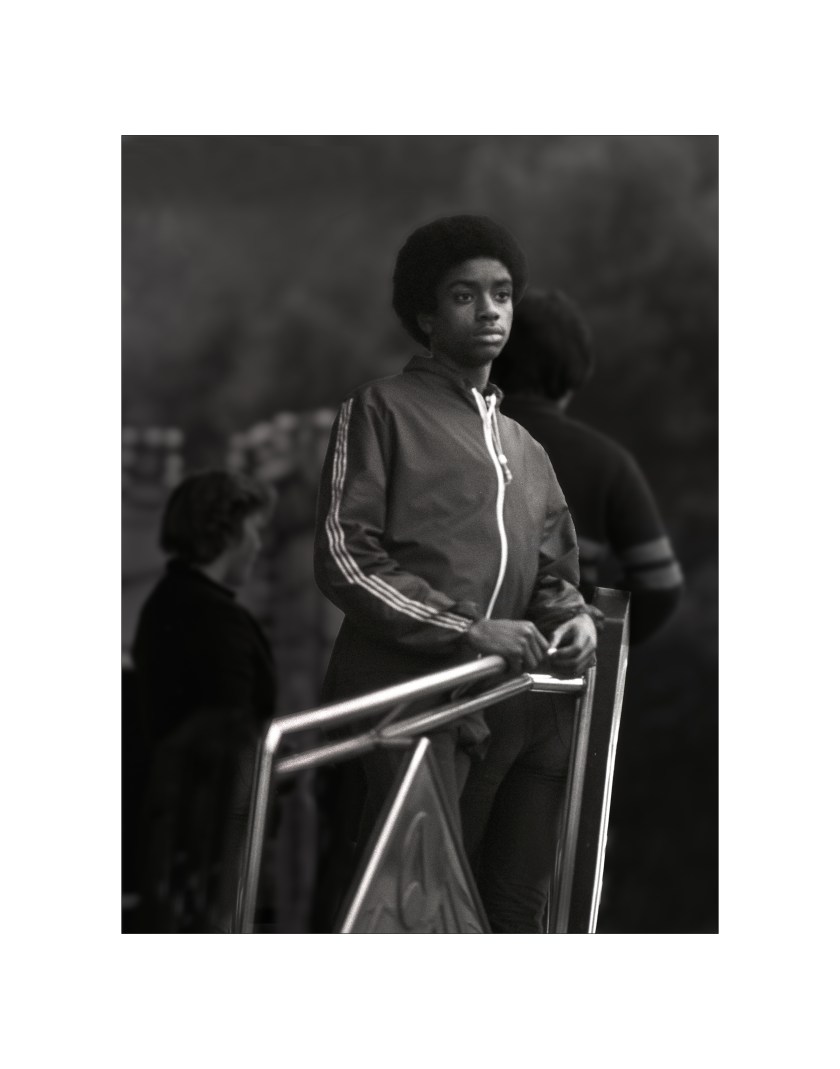
I took this picture of a (then) young man at a travelling fair in Hay Mills, Birmingham (Just off the A45 Coventry Rd) back in the Late 70’s / Early 80’s.
I have a few others from the day but I was recently drawn to this image by the far away look in the young man’s eyes.
If anybody can put me in touch with the subject – just to say hello – I would be grateful. He would be in his 50’s now I suppose. As I say Time Flies.
We stayed in a hotel in Coventry last weekend. We were at the elegantly re-fitted former home of the Coventry Evening Telegraph, a purpose built structure, now a sensitively styled 1960’s hotel.
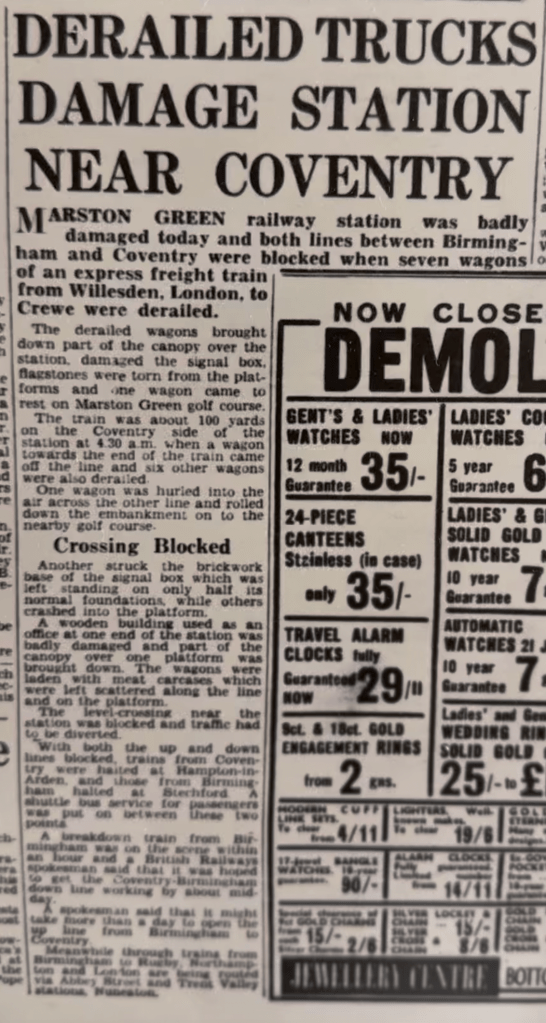
All around the hotel there are reminders of its past, not least of which are old front pages placed all around, even in the bathroom in our room. This one, being placed above the toilet was impossible for me to miss.
The piece recounts an accident in Marston Green, once a small village in my childhood – it even had a blacksmiths forge. The main railway line between Birmingham to Coventry and further, was sandwiched alongside the village and a municipal golf course on the other side of the tracks.
As you can read several carriages of an express train were derailed in the station. This occurred, according to the Coventry Evening Telegraph, in 1963. I was 16 by then. Prior to this, in my pre-teens, I would stand on the skeletal metal bridge over the rail line (pictured below) waiting for the steam engines to go through ,blasting steam and smoke upwards and shrouding me in that wonderful smell which has bewitched many a young boy. Sometimes, the driver would see me on the bridge and give a whistle as he went through. Such an exhilarating experience for a young lad.
All pictures copyright of the Coventry Evening Telegraph.
Should you be interested in staying at the Telegraph Coventry, you can find information via this link…
I live on a small estate made up of bungalows. Single story houses only. Consequently there is a preponderance of old people who live hereabouts. The houses suit us you see; no stairs.
It should come as no surprise when people here die as most of us are around the three score year and ten mark.










 peterdbarton.com