Fellow travelers contd…
The project continues. Lincoln 2019
The project continues. Lincoln 2019
Another picture from the protest march last Saturday.
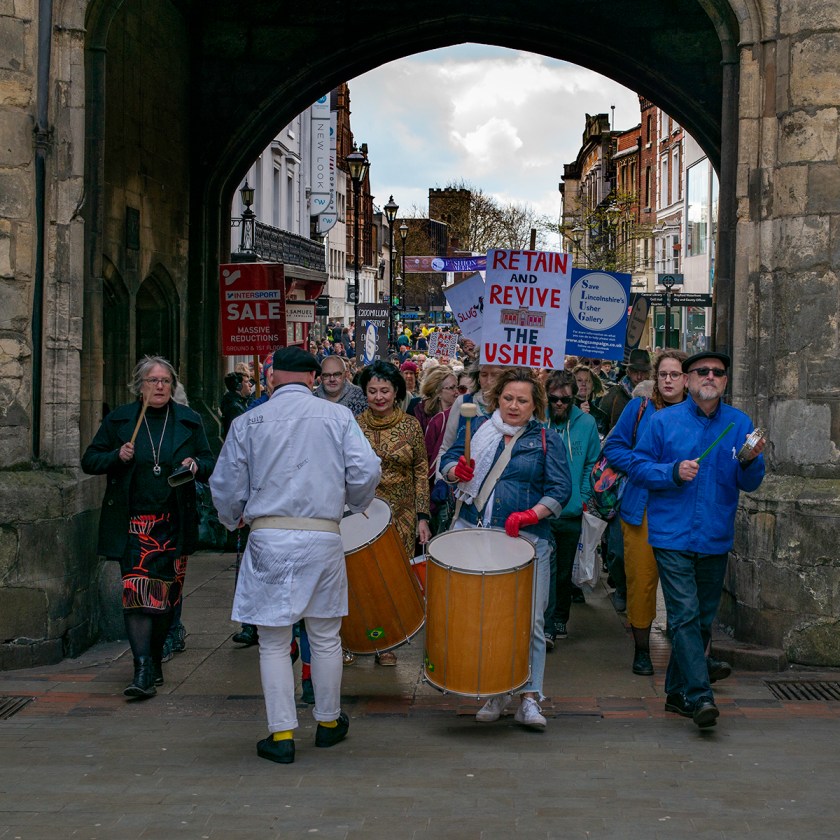
Designed by the architect Sir Reginald Blomfield R.A. The Usher Gallery, on Lindum Hill, was officially opened on the 25th May 1927 with a solid gold key by the Prince of Wales. The gallery was built as a result of a bequest by Lincoln jeweller James Ward Usher. Usher never married and devoted his life to collecting, travelling far in search of particular items to enhance his collection. He never sought public honours but was offered the position of Sheriff of Lincoln in 1916. In 1921 he died at the age of 76, and as was his wish he bequeathed to the City his collection of watches, miniatures, porcelain and silver. He also left a considerable amount of money for a gallery to be built in order to house his collection. Now, in 2019, the County Council wishes to turn the gallery into a wedding venue – despite the fact they do not own the building. This seems to be against the wishes of the original bequest by Usher. It’s certainly against the wishes of …
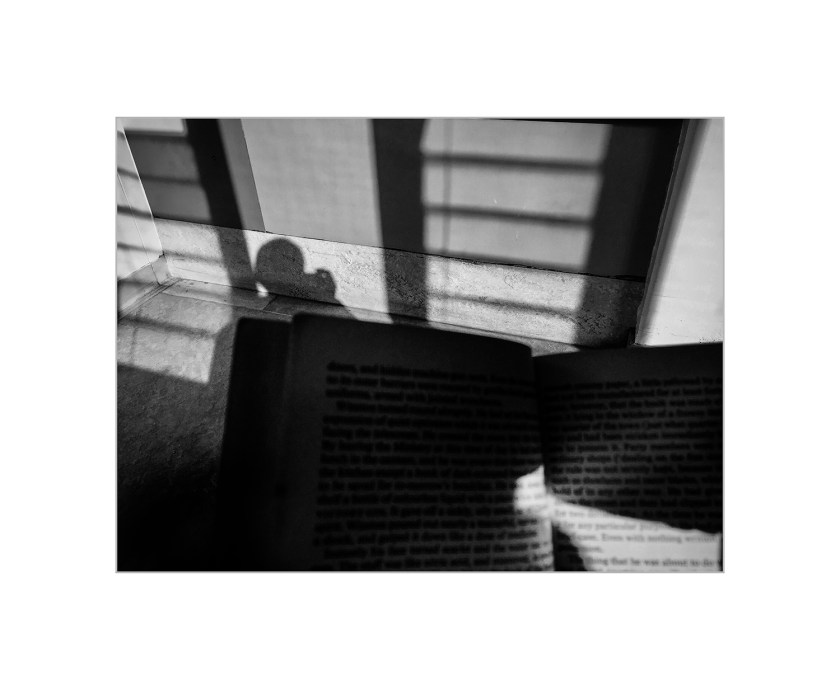
I’ve been spending time in hospital waiting rooms of late. Nothing special; just test after test – another later today. I was sitting reading in one such just the other day and made this picture with my phone. It appealed to me. Lincoln County Hospital. March 2019

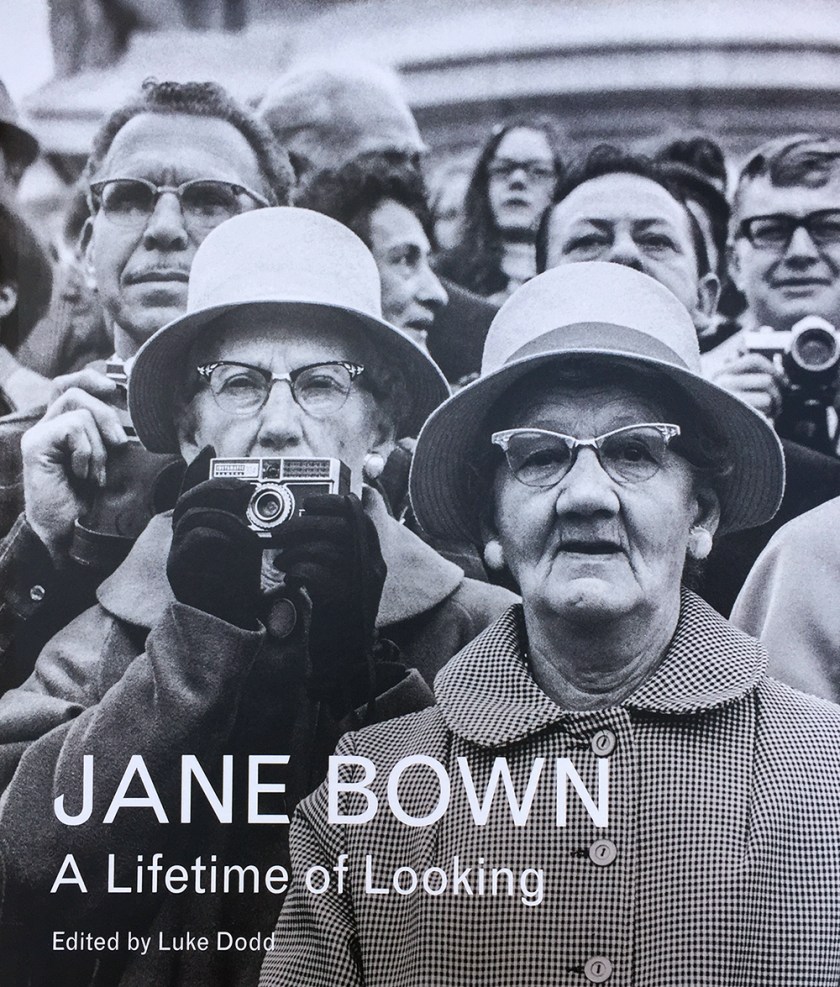
I have been taking pictures since I was around 10 years old when I had a Brownie 127 for a birthday. That’s over 60 years ago. Even back then, with this basic camera, I had to have the clip on close up lens adapter. None of those pictures still exist, my mother had a penchant for slinging stuff out you see. All of my clockwork Hornby trains, track, signal boxes etc went the same way. But that’s another story. After a pretty long hiatus, I took up photography again in my early 20’s when I bought a German single lens reflex camera. And so it went on until the present day. One camera after another, foolishly thinking the camera was what produced the picture. Yes, it made the image but the picture is made in the head. Many years, many cameras and many thousands of £’s later I had full Nikon digital professional cameras – yes 2, a range of lenses, flashguns etc. You name it I had it. And then I woke up. I …

Title: Small Town Inertia. Photographer: J A Mortram. Essays: Lewis Bush. Paul Mason. Poem: Jamie Thrashivoulou Reference: ISBN 9781908457363 First published: Hard back 2017 by Blue Coat Press, Liverpool Website: smalltowninertia.co.uk Size:310mm x 215mm x 20mm Jim Mortram, the master of the Long form of photo story, has released his first book. I’ve known Jim Mortram for a few years and all the while he’s been building up to producing this book; closely working with his community in and around his hometown in Norfolk. Jim’s output is reminiscent of others who have chosen to highlight this sector of our community. The disadvantaged and the disabled. He is following on* from others like: Bill Brandt, who in the 1930’s produced hauntingly beautiful images in the East End of London, the North East of England, and Yorkshire. Much of his work was published in the excellent Picture Post in the 1940’s. Nick Hedges photographs of the poor taken for ‘Shelter’ in areas of deprivation around the UK in the 1960’s and 70’s. About his work Hedges said… ‘Although these photographs …
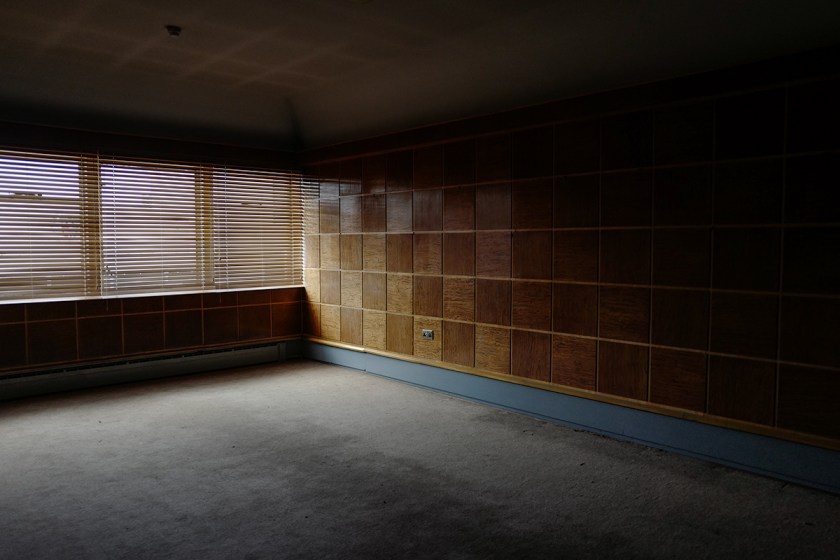
The order of things in Britain has changed over the last few years. It has changed at a pace unlike any I’ve seen in my life. Or, does it just seem to be changing faster because I’m getting older? I can’t tell. I can only view the pace of change from my own perspective, distorted or otherwise. Many of our institutions we once thought rock solid have gone or changed so they’re no longer recognisable. It’s inevitable, I suppose. Change has altered much of the fabric of our society, none more so than the media. The BBC, long regarded as the bastion of independence and autonomy seems to have buckled with its new apparent right leaning bias. The Newspaper industry, always powerful, now seems to have gained a renewed influence as its many independent elements have coalesced around certain powerful individuals. It wasn’t always like that. Britain has a fine record of independent newspapers dotted around the country. The Stamford Mercury, for example, Britain’s oldest continuously published newspaper title having been running since the early …
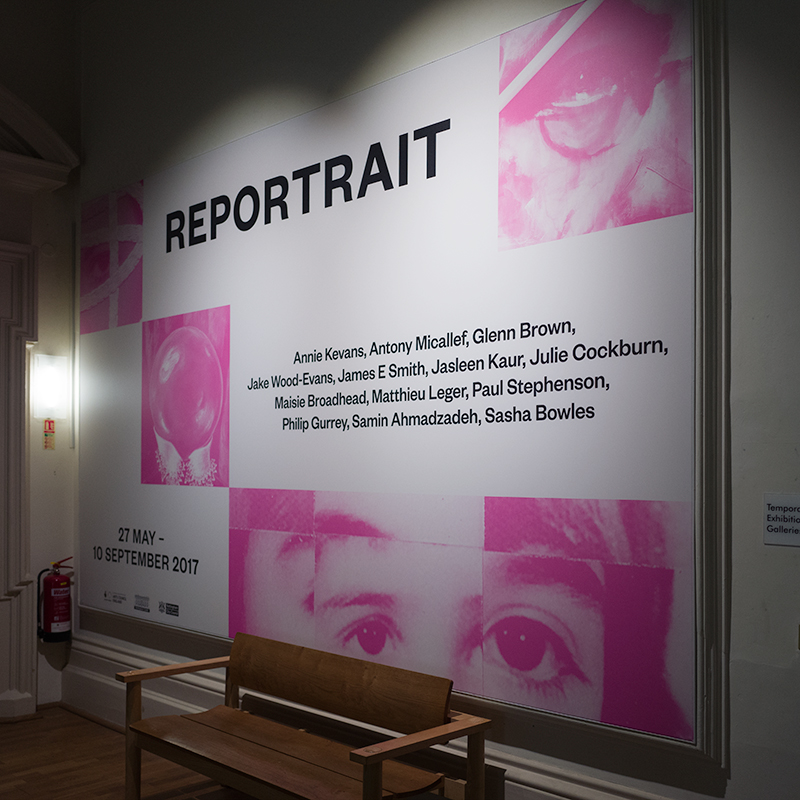
Today I traveled a few miles to Nottingham to view the ‘Reportrait’ exhibition at Nottingham Castle and Art Gallery. I have an interest in portraiture. I like to see the works however they were created. Whether they have been made by hand or captured through a camera’s lens they fascinate me. The last exhibition of painted portraits I visited was many years ago at the National Portrait Gallery. Things evolve, fashions change, new artists appear, so I was unsure what to expect. Not only were there examples of work made by hand using a range of drawing or painting implements, but there were photographs, 3D plastic busts and…well… just so much to involve the interest and curiosity of the observer. I can’t speak profoundly about the art works. The contextualisation of artwork is beyond my limited grasp of fine art. Mine is a simplistic, visceral reaction to each of the works. I employ little or no intellect in my artistic appreciation I’m afraid. They move me, or they don’t. However, even from that simplistic standpoint …
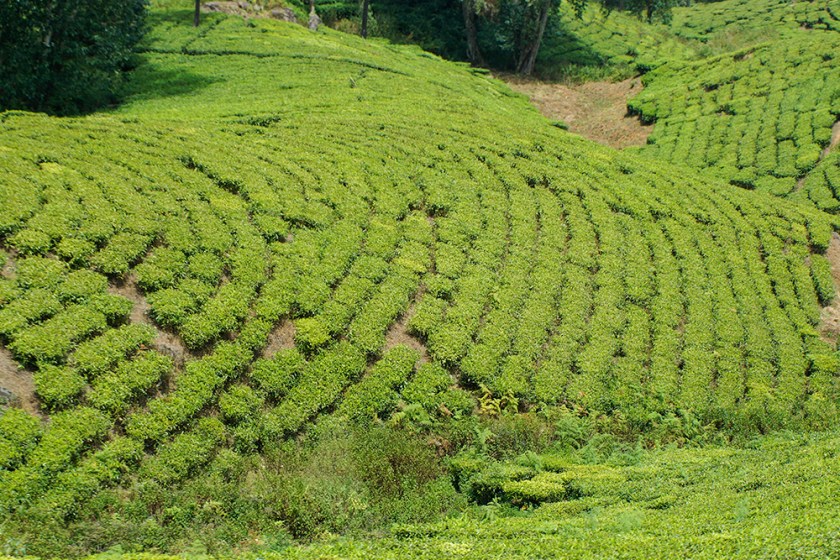
Here in England, we drink a great deal of tea. It’s drunk throughout the day by much of the population. According to the UK Tea and Infusions Association, the British consume 165 Million cups of tea a day (60.2 billion cups a year). By comparison, 70 million cups of coffee are consumed daily in the UK. The title of World champion tea drinkers (by head-of-population that is) goes to the Republic of Ireland. Great Britain is the 2nd largest consumer of tea. The largest producer of tea is China with an annual production of about 2.2 Million tonnes, with India next, producing just about half that amount. As tea is drunk so much here in the UK you would think we would know all about it. Judging from my own lack of knowledge that isn’t so. For example, tea – Camellia Sinensis from which tea is obtained- is a small tree*, not a bush as we would have thought. And, it’s so rigorously trimmed by plucking the leaves it could almost be considered a Bonsai ( …
 peterdbarton.com