All posts tagged: Birmingham

Dolls head in derelict house

Exploring the Fascination of Derelict Houses

This image is of a dolls head sitting on the floor of a derelict house. Derelict houses have always fascinated me. Who lived there? What did they do? Why did they go? It’s about the ghosts of those who have gone before. During my life there have been a couple of opportunities for me to gain access to old properties. Firstly when I worked in the building industry in Birmingham. It was in the early 1960’s. At that time Birmingham was clearing its inner city slums (I was born in one such in Nechells near to the Gas works). Thousands of Victorian houses were being cleared and being replaced, arguably with modern versions. That aside, I had access to houses that had been swept away, though their cellars were still available to me.On a site in Curzon St., we were building a Centre for Public lighting* over what was once rows of early 19thC houses**. Much of was once the superstructure had just been dumped in the cellars we were digging through. In thre cellars …
Time flies.

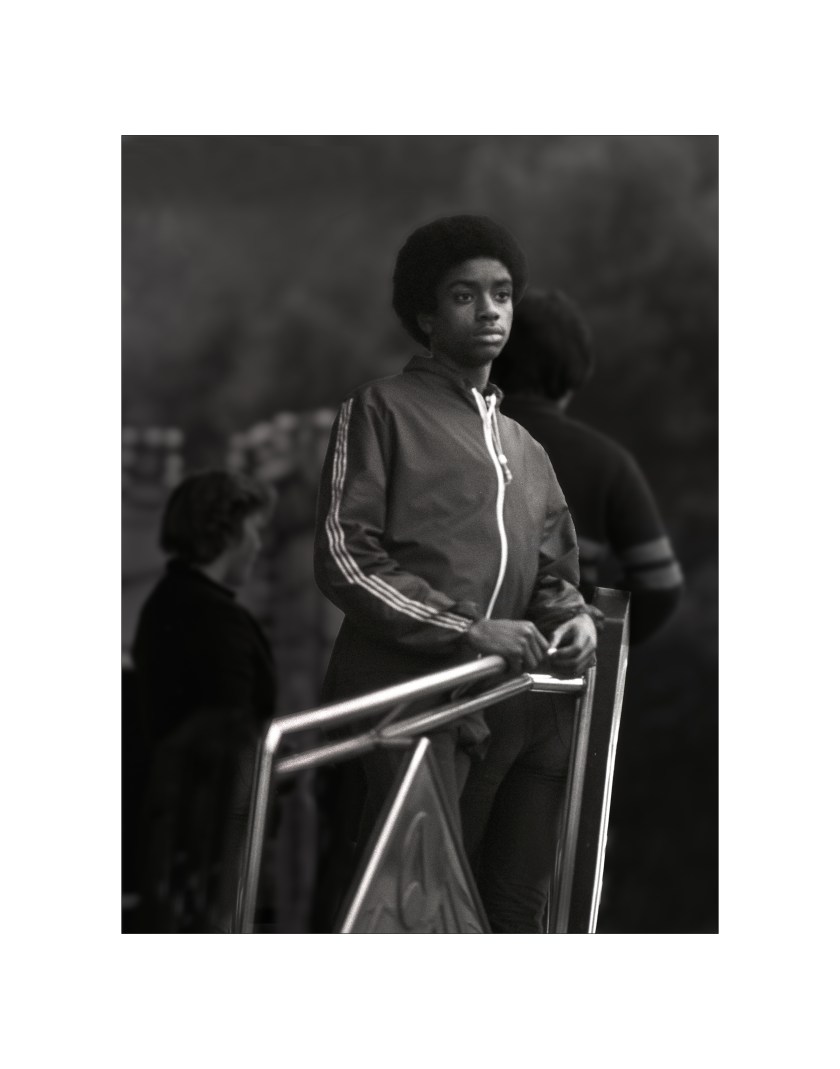
I took this picture of a (then) young man at a travelling fair in Hay Mills, Birmingham (Just off the A45 Coventry Rd) back in the Late 70’s / Early 80’s. I have a few others from the day but I was recently drawn to this image by the far away look in the young man’s eyes. If anybody can put me in touch with the subject – just to say hello – I would be grateful.He would be in his 50’s now I suppose. As I say Time Flies.

The smell of a steam engine.

We stayed in a hotel in Coventry last weekend. We were at the elegantly re-fitted former home of the Coventry Evening Telegraph, a purpose built structure, now a sensitively styled 1960’s hotel. All around the hotel there are reminders of its past, not least of which are old front pages placed all around, even in the bathroom in our room. This one, being placed above the toilet was impossible for me to miss. The piece recounts an accident in Marston Green, once a small village in my childhood – it even had a blacksmiths forge. The main railway line between Birmingham to Coventry and further, was sandwiched alongside the village and a municipal golf course on the other side of the tracks. As you can read several carriages of an express train were derailed in the station. This occurred, according to the Coventry Evening Telegraph, in 1963. I was 16 by then. Prior to this, in my pre-teens, I would stand on the skeletal metal bridge over the rail line (pictured below) waiting for the …

All change, yet again.

I was in Birmingham last week, the city of my birth. And just to remove any confusion, I’m talking of Birmingham in the West Midlands of England. Every time I visit there has been change. The city seems incapable of standing still for just one minute. Perhaps that’s how it should be, afterall, Birmingham is known as the driver behind the industrial revolution of the 18th and 19thC. and was for many years, the home of manufacturing in the UK earning it the aphorism of “The City of a Thousand Trades”. It’s not an old city. Its growth, fed by the industrial revolution, came as a result of hundreds of thousands of ‘immigrants’ from the farming communities in surrounding counties. My own forebears on both sides were “Aglabs”, agricultural labourers, from Staffordshire, Warwickshire, Gloucestershire, together with true ‘immigrants’ from Ireland. Birmingham is a crucible, and always has been. With that growth comes continual change. As a reason for change, added to that of growth, is development – in the shape of technology, working methods etc. …

Our rosy coloured past. Hmmm.

This picture is of a house in front of one of the gas holders at Saltley Gasworks in Nechells, Birmingham. The image was taken in the late 60’s. I was born just a couple hundred metres from here, within sight, or more accurately within ‘Smell’ of the gasworks. My dad worked there after he came back from fighting with the Desert Rats, Montgomery’s 8th army, in second world war. What’s more, those gas holders were nearly the death of him. He fell off one and survived, but that’s another story. This image is a picture of my youth. Although my parents moved to the newly built council estates out in the suburbs, many of my relatives lived in or around this area. I would return often as a child. What this image made me think about was just how much of a product I am of the social and political thrust occurring after the 2nd world war. I am the product of the time and of the policies of Labour, the  political party in power …

Perishing shrines

Work by Lisa Ross. Lisa Ross is a New York based artist. Her work in this exhibition shows images of holy sites of its indigenous Muslim Uyghur population in the Taklamakan Desert in Xinjiang, western China. The exhibition is beautiful. Any pictures of the show, even those on the gallery website, and my small attempt by way of illustration of the elegant basement of the Argentea Gallery above, fail to portray the glorious reality of the prints. They exude a quality of light which is mesmerising. As a photographer I stood in front of the images admiring the sheer technical expertise of the photographer and of the printer. If that is all you go to see this show for then so be it. You will not be disapointed. However, these are not chocolate box or even travel images. There is another aspect to the images. They document part of a way of life of the Muslim population of this part of China which is under threat, indeed these shrines no longer exist and access to …

Just a little of Birmingham’s brutalist architecture.

Three Brutalist building in Birmingham. Two of which have gone. The first is the now-demolished Birmingham Central Reference Library designed by John Madin and constructed in 1974. It lasted 41 years before its recent destruction. The second is the signal box at New St Station (comprising 2 images), designed by Bicknell & Hamilton and W.R. Healey and completed in 1965. This is listed and so remains. The third is 103 Colmore Row, the Nat West Tower, as it was known. Designed by John Madin. It opened in 1975.  It was demolished in 2015-16 and is to be replaced by another, taller tower.

Fairground attraction 1970’s

Back in the late 1970’s, I would wander around my home city of Birmingham, camera in hand. At the time it was all Black-and-White work, self-developed and printed in a makeshift darkroom. I had different cameras to choose from, nothing exotic. I used twin lens reflex and 35mm. These images were from my 35mm camera probably on *400asa film hence the grain. *(I must check as I have the original negatives somewhere) The images below were from a sojourn to an impromptu fairground, many popped up like this around the city. This one appeared in Hay Mills, adjacent to the A45 near to Small Heath.