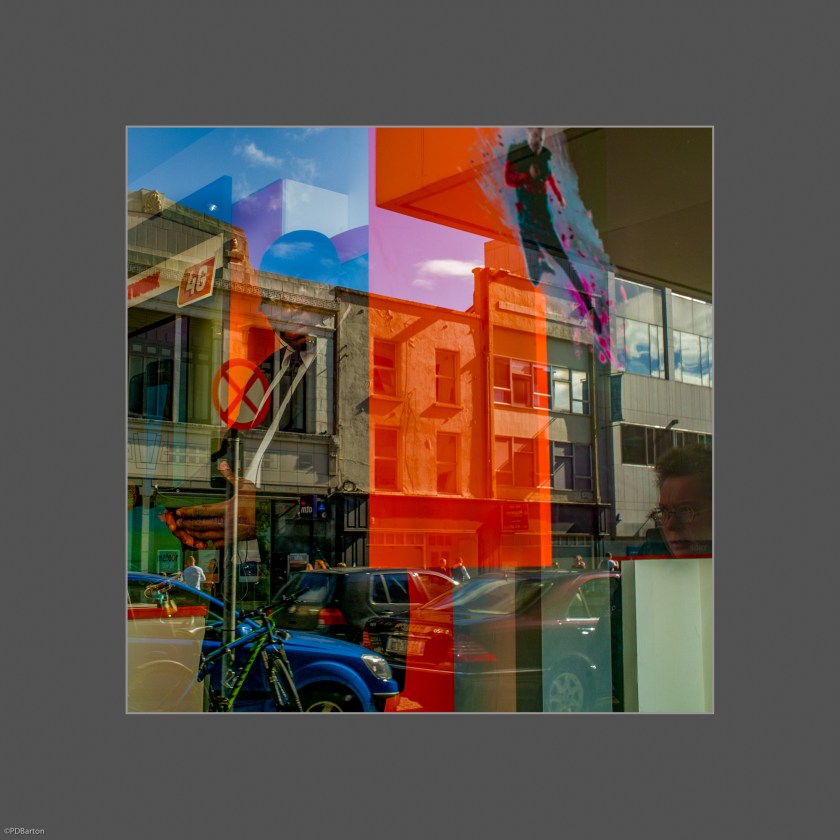
Dublin
A street image from a walk in Dublin.
A street image from a walk in Dublin.

I was in Birmingham last week, the city of my birth. And just to remove any confusion, I’m talking of Birmingham in the West Midlands of England. Every time I visit there has been change. The city seems incapable of standing still for just one minute. Perhaps that’s how it should be, afterall, Birmingham is known as the driver behind the industrial revolution of the 18th and 19thC. and was for many years, the home of manufacturing in the UK earning it the aphorism of “The City of a Thousand Trades”. It’s not an old city. Its growth, fed by the industrial revolution, came as a result of hundreds of thousands of ‘immigrants’ from the farming communities in surrounding counties. My own forebears on both sides were “Aglabs”, agricultural labourers, from Staffordshire, Warwickshire, Gloucestershire, together with true ‘immigrants’ from Ireland. Birmingham is a crucible, and always has been. With that growth comes continual change. As a reason for change, added to that of growth, is development – in the shape of technology, working methods etc. …

This picture is of a house in front of one of the gas holders at Saltley Gasworks in Nechells, Birmingham. The image was taken in the late 60’s. I was born just a couple hundred metres from here, within sight, or more accurately within ‘Smell’ of the gasworks. My dad worked there after he came back from fighting with the Desert Rats, Montgomery’s 8th army, in second world war. What’s more, those gas holders were nearly the death of him. He fell off one and survived, but that’s another story. This image is a picture of my youth. Although my parents moved to the newly built council estates out in the suburbs, many of my relatives lived in or around this area. I would return often as a child. What this image made me think about was just how much of a product I am of the social and political thrust occurring after the 2nd world war. I am the product of the time and of the policies of Labour, the political party in power …

I visited an exhibition of photography in Hull yesterday – 5th October 2019. Amongst the work there was a large display devoted to the work of Tristan Poyser. In this intriguing piece Tristan explores the concept of the Geographical / Political border between Northern and Southern Ireland. The line has been a contentious issue for many years and with the Brexit issue (where Southern Ireland will stay in the EU and Northern Ireland – being part of Great Britain – will potentially leave the EU ) inflaming debate once more. Tristan travelled the line over a period of a couple of years photographing as he went. Unlike County and National lines in, say North America, the lines are not straight, twisting and winding as they do. Tristan handed out images he had taken and asked people to rip the images along where they thought the border may be. The effect was to produce a large number of public interpretations of the border, many annotated with what they thought about the connected issues. The main part …

In her own words. One woman’s life, and what a lesson it is for us all. “I am not sure of my exact year of birth but I think I should be around 66 or 67 years old. I was born around here, near Dharamsala, and lost my mother as a child, I was raised by my stepmother. Later I was married at the age of 15. I lost my husband at the age of 24, to some unknown sickness due to stomach pain. I moved back to Dharamsala from my inlaws place after the death of my husband as I faced a lot of problems and was not wanted there. I sold off whatever little farmland I had and I bought a small piece of land and built a mud hut in Gamru village (quite close to Mona, the doll makers studio) as till I was 24 I could work on the farm but after my husbands death it became difficult to farm, tend to cattle and take care of the girls as I had …
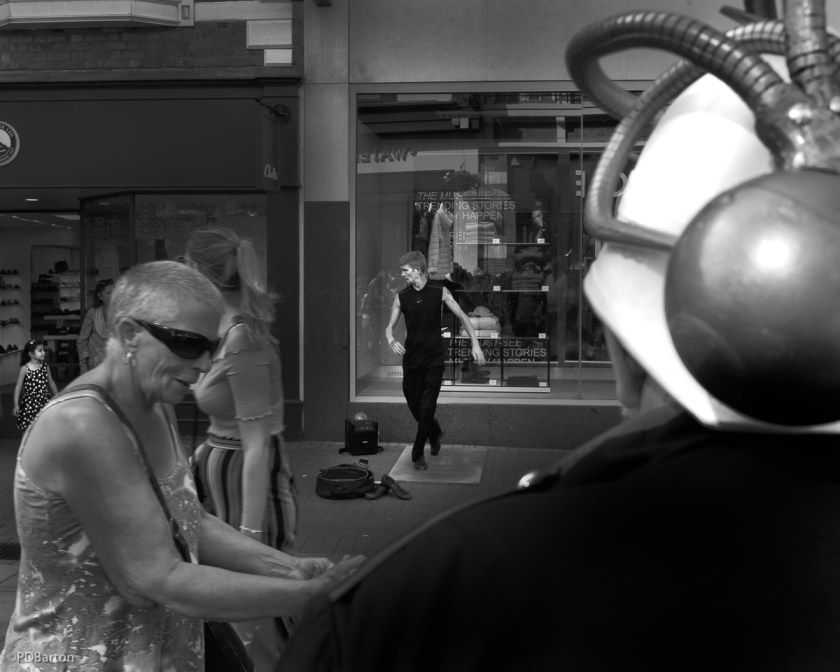
For me, a satisfying image has shapes and layers. I was at the SteamPunk festival in Lincoln on Saturday. This image was from the lower half of the city (where there were fewer SteamPunk attendees). I was drawn by the incongruous hat of the SteamPunker – a white military helmet surmounted and enclosed by an Octopus. I use that as the front layer and slightly out of focus, with shoppers passing in the next layer. The layer which first attracted me contains the Irish Dance Busker making eye contact with the delighted little girl. Finally, in the last layer of interest is the shop attendant peering out of the window. I find this image satisfying even though it’s far from perfect containing as it does elements others may believe detract from the image. As you maybe aware, my images are just for me so you may not agree. That’s OK. That’s what makes this art form so interesting – alternative views of the same thing and differing opinions.

Shop window sign in the sun. Lincoln 2019.

I don’t know about you, but I thought the Barbican in London was simply an arts centre – “simply an Arts centre” there’s an understatement for a start. Just how wrong can you be? My wife, Sue, knowing I like Brutalist architecture bought me a ticket for a guided architectural tour of the ‘complex’ and complex it is. Not only is it an arts centre – by the way, this section of the development was finalised and built last – but it is a housing project comprising around 2000 flats. First, throw away all preconceptions of what a ‘housing project’ of this size would look like. The project was conceived in the late ’50s by architects, Chamberlin, Powell and Bon. They planned and delivered a high quality, wonderfully detailed living space, and due to the management of the terms of the letting or sale of the units, it has remained so ever since. Strict conditions apply regarding what the occupants can and cannot do – but I’m getting in front of myself. If I may backtrack; The area …
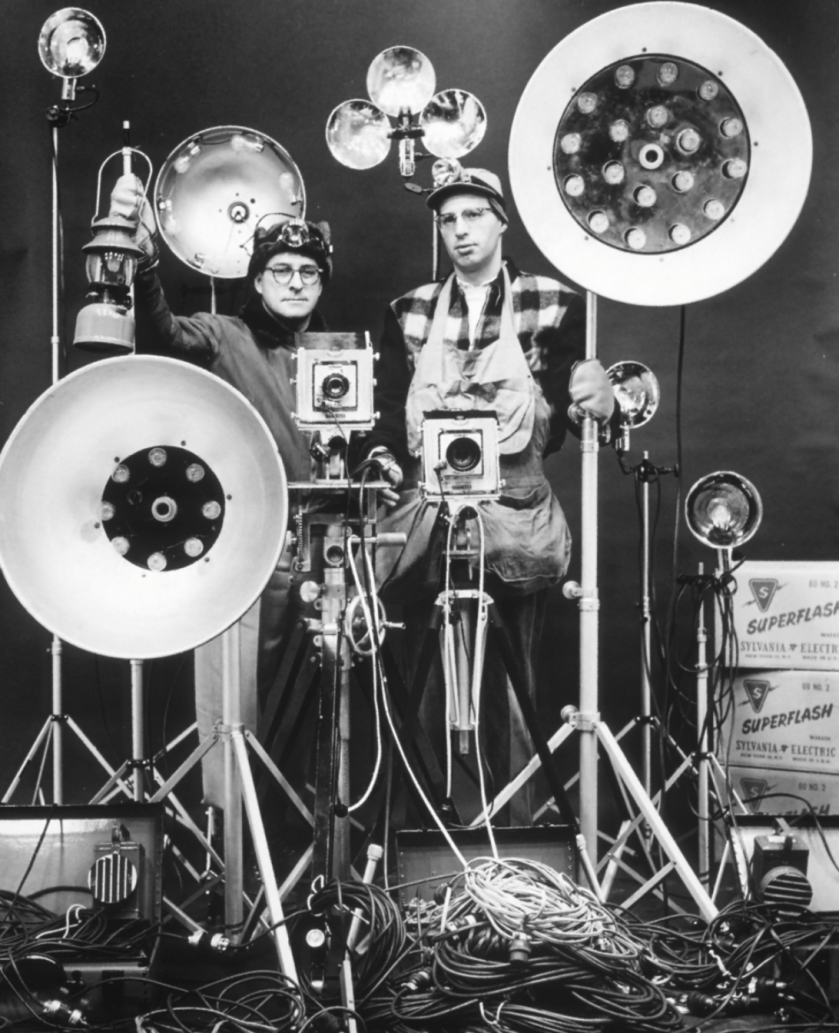
I’m going to start this piece by declaring that, at no time in my life have I ever been a trainspotter or engine enthusiast. No, it’s not that particular obsession which feeds my appreciation of the technical ability and art of O. Winston Link – who? Ogle Winston Link (1914 – 2001) was an American photographer, originally from Brooklyn, New York City. Introduced to photography as a boy by his father, Link went on to achieve a degree in Civil Engineering. Whilst at the Polytechnic Institute of Brooklyn he served as ‘photo editor’ for the institutes’ newspaper. He later moved into photography proper. Link had a longstanding love of railroads (probably resulting from his training as a Civil Engineer), particularly steam, which became sharply focused by the impending conversion of the railroads to Diesel power in the mid-’50s. Link became heavily involved with the Norfolk and Western Railway (N&W) one of the last steam railroads in America. Link’s work was self-financed, though he was encouraged by N&W officials from the President of the railroad downward. …
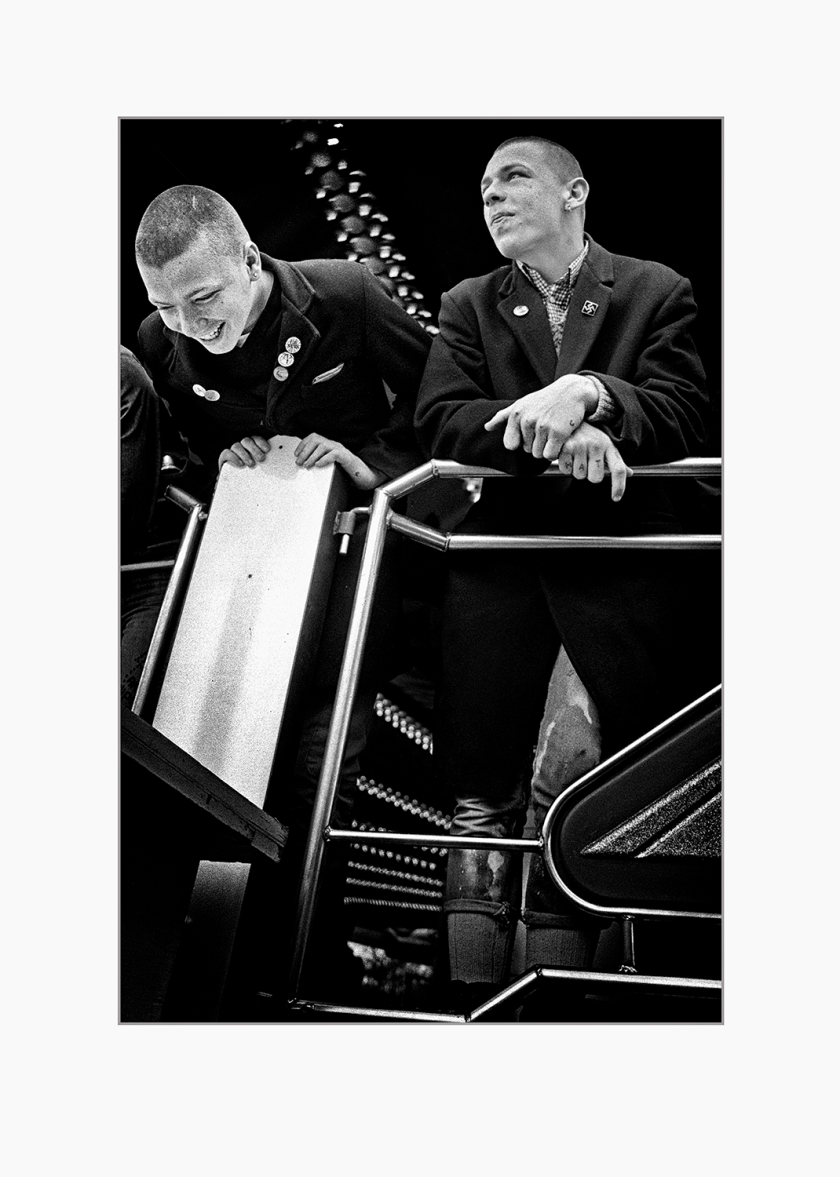
Recently, I was trying to decide on a picture to put in place at home. Knowing Sue, my wife likes this image I decided on this. It was taken at Cannon Hill Park, Birmingham in the late ’70s, maybe very early ’80s. It shows two of a group of Skin Heads standing on the Waltzers, a fairground ride at the ‘Tulip Festival’. Both are wearing tight Levi jeans and ‘Doc Marten’ boots, one with a ‘Ben Sherman’ check shirt and with a ‘Crombie style’ overcoat over. And each, of course with the required shaved head haircut, Various pins and badges are worn on the lapels, one being a Nazi Swastika. On occasion, wrongly I’ve printed it without the badge. I print it here without any editing – as I believe it should be. The image portrayed by the skinheads is underlined by the “Love and Hate” tattoo across the knuckles of each hand further enhancing the anarchic, hard man ‘Fuck you’ image they choose to put out. It is a picture of its time reflecting, as it …
 peterdbarton.com