All posts tagged: photography

Dolls head in derelict house

Exploring the Fascination of Derelict Houses

This image is of a dolls head sitting on the floor of a derelict house. Derelict houses have always fascinated me. Who lived there? What did they do? Why did they go? It’s about the ghosts of those who have gone before. During my life there have been a couple of opportunities for me to gain access to old properties. Firstly when I worked in the building industry in Birmingham. It was in the early 1960’s. At that time Birmingham was clearing its inner city slums (I was born in one such in Nechells near to the Gas works). Thousands of Victorian houses were being cleared and being replaced, arguably with modern versions. That aside, I had access to houses that had been swept away, though their cellars were still available to me.On a site in Curzon St., we were building a Centre for Public lighting* over what was once rows of early 19thC houses**. Much of was once the superstructure had just been dumped in the cellars we were digging through. In thre cellars …

Humber and Holderness Coast: Unpublished Image from the Meridian Project.

This image was made as part of the Meridian Project but was not originally published.It shows the East Coast just above the Humber on the Southern end of the Holderness Coast. Co-ordinates for the image:0° 0’22.09″W, 0015 / 53°45’47.05”N Close to the horizon, to the right of the frame, is the Lincs Offshore Wind Farm which is situated 8Km off the Skegness coast. The Meridian Project, entitled “A Line Runs Through It” can be seen here… “A LINE RUNS THROUGH IT” The project documents a photographic journey down the 0deg Meridian Line as it passes through Lincolnshire, after originating at the North Pole the first land it reaches is in Holderness.Captured over many days spread over 6 months, the photographer travelled the length of the 0deg Meridian as it passes through Lincolnshire, a distance of just over 70 miles. Images of the people and places were made along the line from landfall in the Holderness area just above the Humber Estuary, crossing the Humber into the North East Coastal plain, then cutting through Louth, an …

A suggested revision

Sue and I were in Roker in the North East of England recently. Whilst at dinner in the Roker Hotel we sat next to Ian Macdonald, a photographer from that area. We got talking and Ian looked at a couple of small images on my phone. He made suggestions about the editing of the one you see here. I made those alterations. The image looks all the better for it. Thanks Ian.

Artificial Intelligence. Oh No! Not that again. Yes but….

Before you switch off with boredom, I don’t want to talk about the “Terminator’ effect. No, mine is a more mundane topic and one I have not heard discussed thus far in relation to AI. As I understand AI, insofar as it relates to the production of images, is the production of a specific machine created image and is made possible by “Talking”, and I use the word loosely here,  to a machine  instructing it as to the type of picture you want produced, what you want included and telling it what you want to see. Sorry if I have been over simplistic here. The machine then constructs the image and delivers it to you.  I understand it uses data, i.e. images, from the vast resources of the web to make its construct. The question comes to mind; Do the AI packages pay for the use of these images to fabricate the final images? I’m guessing not. So the images are simply misappropriated, not in monetary terms, but for the benefit implicit in using those …

Time flies.

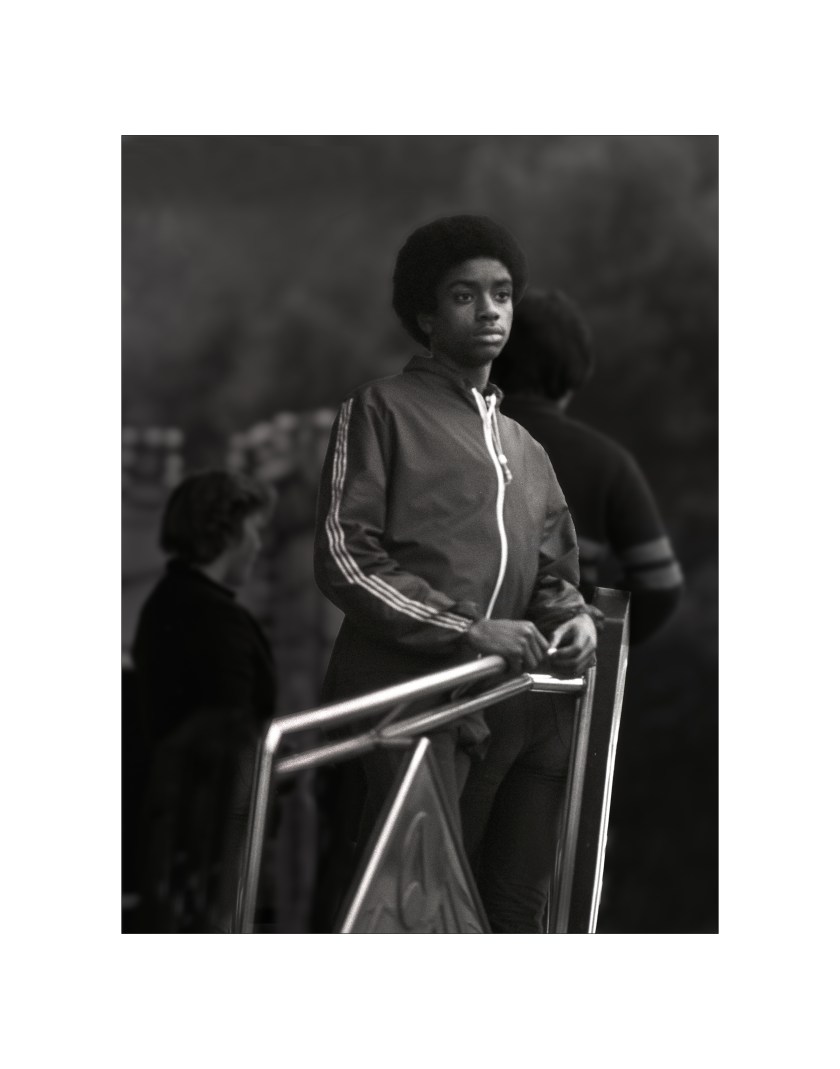
I took this picture of a (then) young man at a travelling fair in Hay Mills, Birmingham (Just off the A45 Coventry Rd) back in the Late 70’s / Early 80’s. I have a few others from the day but I was recently drawn to this image by the far away look in the young man’s eyes. If anybody can put me in touch with the subject – just to say hello – I would be grateful.He would be in his 50’s now I suppose. As I say Time Flies.

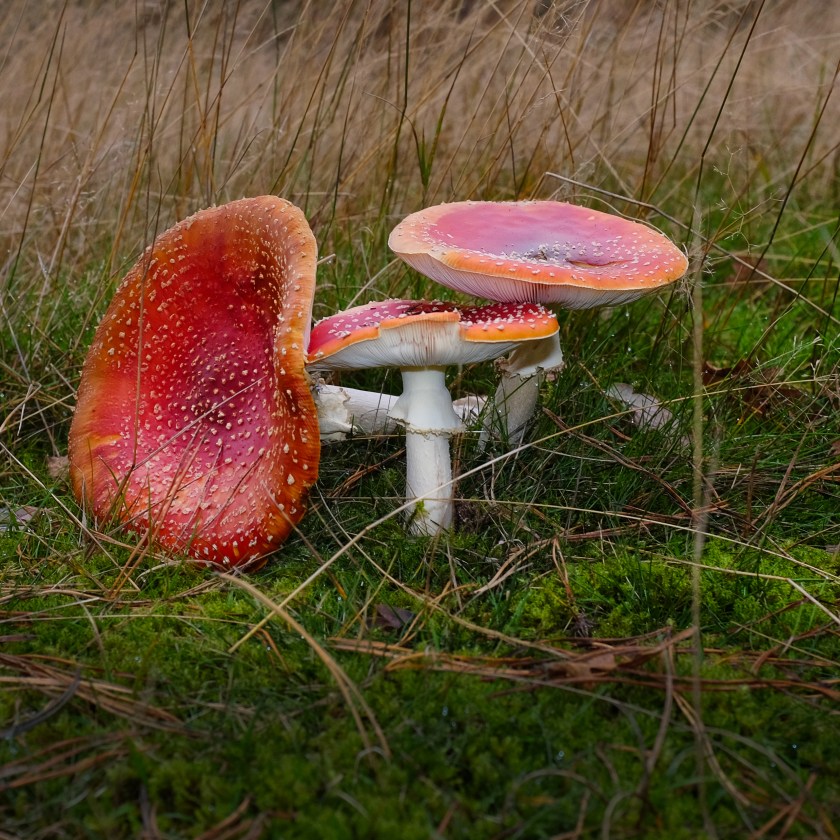
Fungi in the woods

The brown leaves of Autumn show themselves on the trees. The season is changing and with that change comes fungi. Walking in the woods with Bess, our Chocolate Labrador, is something I do all year. I like the peace and quiet. I like to watch the seasons change. Sometimes, I just like to sit on a tree stump and listen. Coming from a city, I appreciate the lack of noise. The best time of year, in my opinion, is early Autumn. The sun still holds some warmth and its light remains strong, creating dappled patterns on the freshly carpeted floor of the woods.

Urbex at Nocton Hospital

As you may be aware, in the second world war Lincolnshire was home to many airfields. So much so, a specialist RAF hospital was set up near Lincoln in the  sleepy  village of Nocton. The village had already housed a similar set up during the first world war which had taken over  the ancient Manor House and grounds. The Hospital was expanded during WW2 so as to provide medical support for the many RAF  and USAF airmen stationed across the County. Post war, the hospital was again expanded to provide a more general medical support for the growing number of RAF families in Lincolnshire and beyond when, amongst other changes, the maternity unit was constructed. My wife’s family were RAF and indeed my mother in law was treated there and one of my brothers in law was born there 60-odd years past.

Soot and Distemper

In a conversation I was having with fellow photographer John Meehan over on ‘WhatsApp’ he quoted the phrase “Soot and whitewash” to describe prints using an economy of tones in mono printing. The conversation started after I  published the image shown above of Saltley Gas Works in Birmingham taken back in the late 60’s – early 70’s. Very reduced tonal scale, very grainy and even scratched. I said it was redolent of the times. John’s phrase came from a book called “Young Meteors” by Martin Harrison in which he discusses photographers and their styles in the years 1957-1965. The tonal compression style of McCullin, Bulmer et al is dramatic. The images jump off the page. I wrote in my previous piece on WhatsApp how Saltley, where I was born and lived for a few years, has left a strong impression on me, reflected in this Gas Works shot. For me *“Soot and Whitewash” has 2 meanings: The first, clearly, is the graphical reduction of tones in a black and white print; The second meaning reflecting …

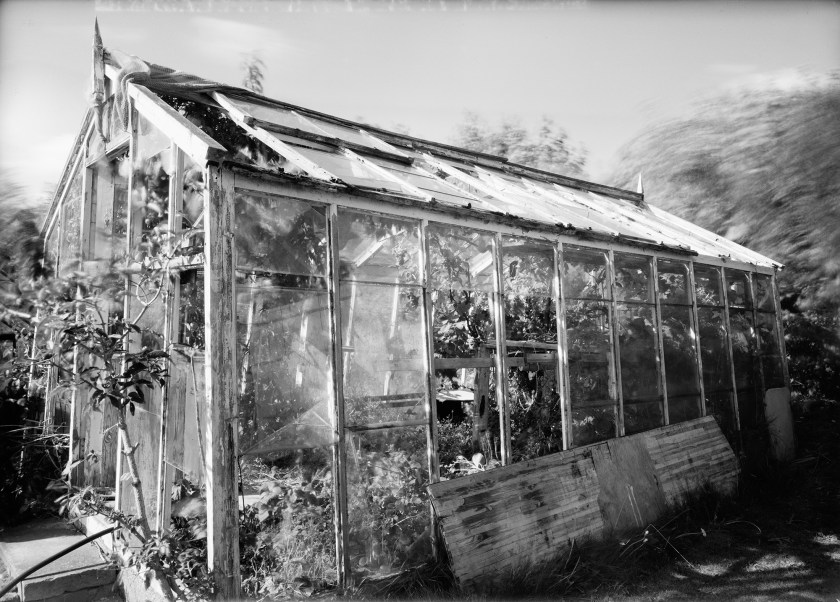
The meaning behind ‘The Greenhouse’

Recently, I was musing on the relevance of images to each of us and how that changes from person to person. People see an image and it means different things to each person. The image  effects them. To some that effect is deep and meaningful, visceral even, and to others it’s trite and meaningless. I can’t account for that except it’s perhaps what allows us to “edit” the millions of images we see, into piles – important/trivial, like/dislike – and I have to say, in the main, that’s how my own editing works. Binary. On / off – like / dislike. Phil Cosker, a dear friend of mine, a photographer, writer and all round Renaissance Man, produced a set of images nearly 40 years ago. Recently he displayed them – printed very large – in a number of churchyards around Lincolnshire. Even more recently he has included them on his web site <<<HERE>>> under the title “Landscapes”. I was assisting Phil with his web site at the time and as I was uploading the images, …