Latest Posts

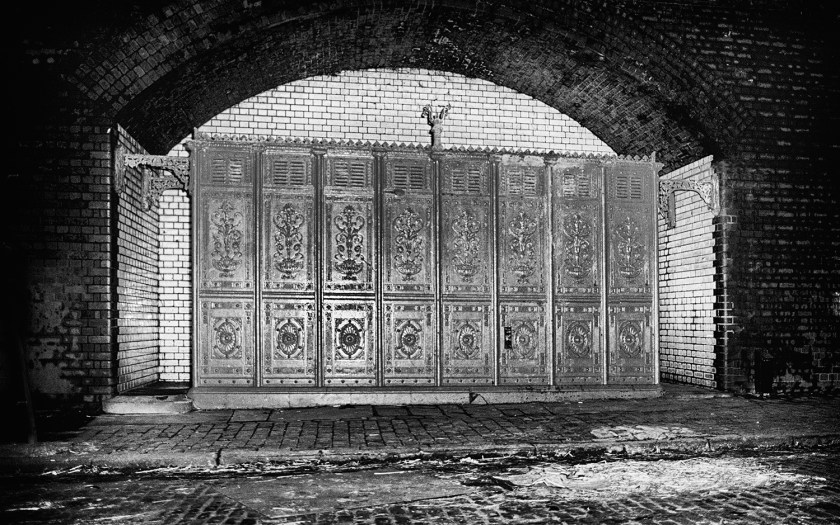
Victorian cast iron men's urinals under railway​ arches. Central Birmingham. Late 1970's

I talked yesterday of beauty in decay…

Yesterday  I reviewed the book ‘Beauty in Decay’. I mentioned in that review I was interested in this as a subject myself. I have very little work to show in this genre, despite being involved in urban renewal myself, which inevitably meant the destruction of these buildings. Way back then, sadly,  I didn’t carry a camera wherever I went. That’s a great regret to me – and should be a lesson to us all.

However, in the mid to late 70’s I did get the occasional frame which indicated my leanings in this direction. I post three here. I hope they interest you.

At an exhibition of some of my work back in the 70’s a critic said I was from the “dustbin school”. I was offended back then, I would take that as a compliment today.

The image at the top of the page shows a Victorian, cast iron, men’s urinal in central Birmingham. It was placed underneath the railway arches on the approaches to New St Station, near to the Bullring. I returned a few years back. The structure had been boarded up. Birmingham has a few of these edifices still in existence. The remaining ones are usually smaller and freestanding. They were once dotted all over the city.

Derelict house. Birmingham. Mid 1970's

Derelict house. Birmingham. Mid 1970’s

After the war, many buildings were left derelict, mainly in planning blighted ‘urban renewal’ areas of the city.
In 60’s Birmingham, it was said, “what Hitler failed to achieve, the planners did for him”. Whole areas of Victorian houses were scheduled to fall under the demolition man’s wrecking ball.
On the left is one such house in the Hockley area of the city.

Back in the 70’s the unoccupied houses were used by those sleeping rough, much as today I suppose. This house was occupied by a few such unfortunates.
I returned a few years later. It had been demolished.

The picture below shows the old wash-house at the rear of a *back to back house in the city. This was a type of build where a group of houses was arranged in a block. The houses, arranged around a communal yard, were ‘back to back’ as it were.

The wash house had a coal fired ‘copper’ in the corner in which the washing was done. You can see what remains of that in the picture.

Birmingham still has many Victorian – and earlier – houses which are in various states of disrepair though venturing into them today, single-handed, may be more precarious than it was back in the 70’s. Even back then people thought me crazy to do so.

*Should you wish to discover more about this typical Victorian inner city Birmingham type of house you can see an existing block refurbished by the National Trust here. I was born in a back to back but I have no recollection of it as my family moved out to the suburbs at the start of the City-wide modernisation in the 50’s.
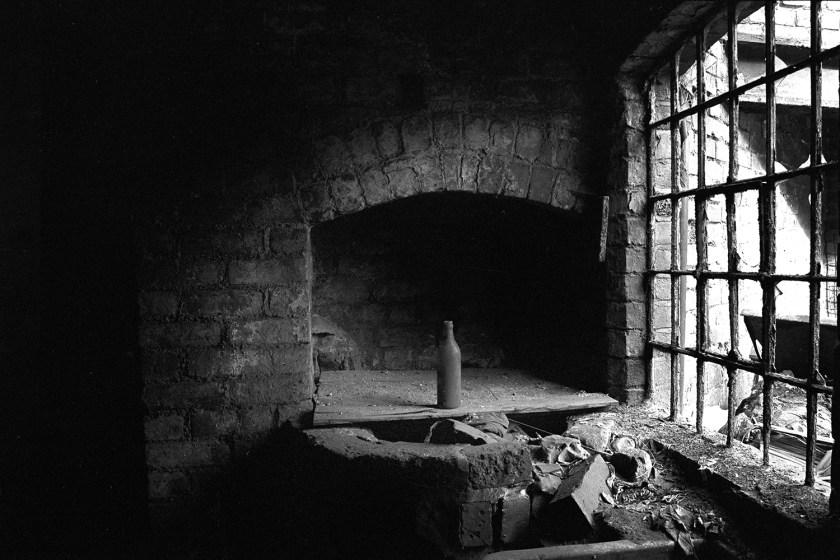
Derelict house. Birmingham. Mid 1970's

A derelict house in Hockley Birmingham. Mid 1970’s Just prior to demolition.


Beuty in decay

Book Review: Beauty in Decay II

Title: Beauty in Decay II.
Photographer: RomanyWG.
Essays: Polly Chillery.
Reference: ISBN 978-1-908211-10-1.
First published:  2012 by Carpet Bombing Culture.
Web site: www.carpetbombingculture.co.uk.
Size:267mm x 267mm x 24mm square format.

I admit to having esoteric taste in photography. For example, I have always liked images of old buildings in decay. There is something about faded grandeur, that evanescence, which haunts me. Perhaps it stems from my time spent in inner city Birmingham in the 60’s working to rebuild the city after the war years. Many buildings were demolished: domestic; commercial; and governmental. I was able to wander among them before demolition. In the quiet time, before they died.

Or, perhaps it was my time spent as a building surveyor where it was my job to inspect old buildings. I have been inside of many fascinating structures.

So, you can see why a book depicting images discovered whilst urban exploring might fascinate me. This book doesn’t disappoint. It has dozens of images, many filling the whole page, taken in many countries. The subject matter ranges from grand domestic to industrial. Unfortunately, the pages aren’t numbered so I can’t easily indicate images I like but, in a section called “the future is yesterday”, there is an image of contorting tubes which are beautifully lit in a dark space. The whole is like an elegant piece of sculpture. As a found object it has achieved an artistic beauty which was never intended when it was built.

And so it is with many of the images in the book. Whether it is with the startling beauty of grand palaces in decay, the frightening echoes of old asylums, or the complex, rusting elegance of industrial sites, this book grabs your attention.

It’s a must for all us armchair explorers of our decaying past.

PDBarton
Lincoln
2017

Did one camera change street photography?

Remember: ‘Seeing’ is not about cameras.

Tony Kubiak, a fine photographer I once knew told me “It doesn’t matter if you didn’t capture it, just so long as you saw it”. The “it” in question at the time was an image I was telling him about; one which I had failed to capture.

Anyone involved in the practice of street photography – a subject notoriously difficult to precisely describe as the phrase means many things to many people – will tell you It’s important to carry a camera with you at all times.

Some would argue the camera which really changed the way we approached street work is the camera in our mobile phones. And, I suppose, working on the old cliche of “the best camera for the job is one you have with you at the time” as we have our phones with us most of the time it follows that could be the case.

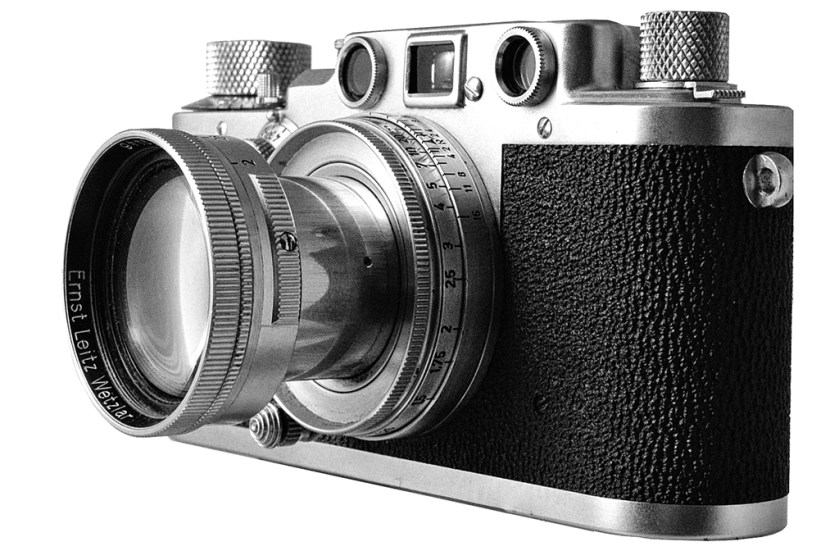
Of course, the quality of the image from modern phones (written in 2016) is astounding which adds to the veracity of that argument; but, for me, the shift first took place back in the early -1910’s with the production of the Ur-Leica , the first of the 35mm cameras capable of being carried at all times yet still providing excellent results. Yes, there were small cameras prior to the production of the Leica Ur, the Vest Pocket Kodak for example, but image quality was relatively poor; it was a camera for the amateur.

After these first three Ur-Leica’s;  yes only 3  were made, the imminence of the first world war in 1914 delayed development of Leica 35mm cameras. It wasn’t until 1925 we see a much-improved version of the clumsy 1913 Ur-Leica model, the Leica 1.*

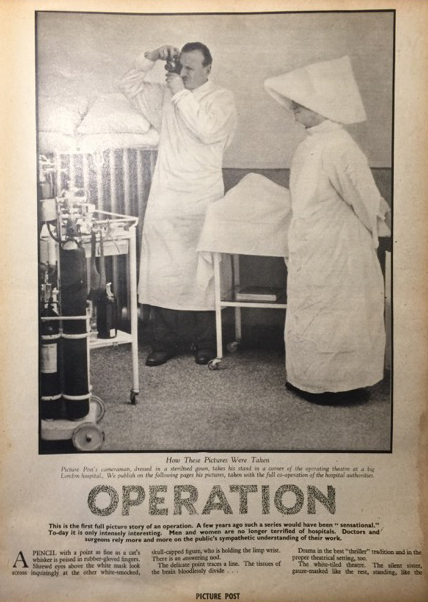
leica-in-post

Leica being used in 1938 by Picture Post Image ©Picture Post.

The camera functioned in much the same way film cameras functioned from thence forward. Leica’s 35mm cameras set the standard. With the addition of an attached rangefinder to the early models which measured distance, and thus improved focus (built into later models) we saw what looked like  The Modern Camera. A design which simply evolved over the ensuing years into what we see today.

The Leica was pocket sized. It was small. Yes, even by today’s standards, it was small and beautifully engineered. Being made of brass it was durable. The optics were outstanding.

For the age in which it was created it answered the requirements: it was portable; silent; it was fully adjustable; it had swappable lenses; it was easily focused and wonderfully engineered. It was the perfect tool for street photographers.

Right from the beginning, on the first few pages of its first edition in October 1938, the revolutionary Picture Post makes clear it’s using the 35mm format Leica when choosing to publish a “how was it done” piece picturing a modern operating theatre.  You can see the be-gowned photographer using his Leica in the image above.

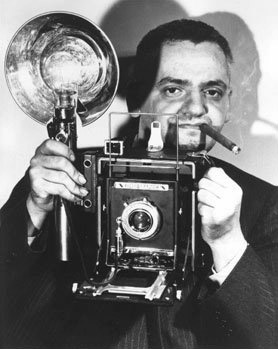
WeeGee

WeeGee. © By Source (WP:NFCC#4), Fair use, https://en.wikipedia.org/w/index.php?curid=40059481

Of course, some photographers continued with large format cameras. WeeGee – on the left here- for example, real name Arthur Usher Fellig (1899-1968), was famous for using a large format 4X5 Speed Graphic camera and a large flash.

But the die was cast. 35mm for reportage, street, and photojournalistic work was to become the norm. Lugging a large plate camera and the film plates around was just not practical, nor was it unobtrusive. And there is the key. Most street photographers chose to be as unobtrusive as possible. 35mm sized cameras provide that level of invisibility.

Leica with its small size, portability and the excellent performance of the body and, in particular, the lenses, opened new doors for street photographers. In so doing Leica changed the way photographers worked in the streets.

Back to the question. Did one camera change street photography? Well, I hope I’ve shown that it did.

*Development had started after 1918  when Oskar Barnack had joined with Ernest Leitz.  Pictures were made in the early 20’s with this format  


Small Town Inertia. A seminar with Jim Mortram

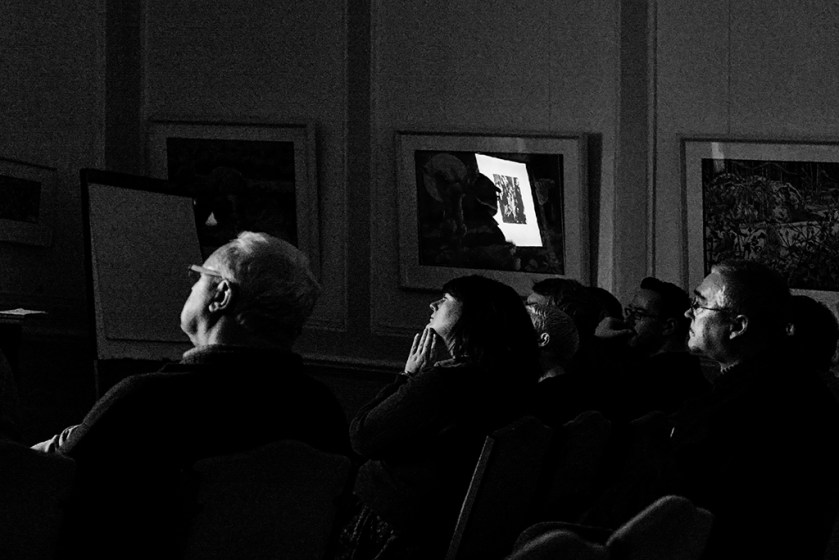
This event was an intimate seminar with Jim Mortram, famous for his “long-form” photographic essays about people living  in his community in rural Norfolk.

Jim Mortram produces strong black and white images, sometimes gritty, challenging, intimate even, but always considerate of the subjects. But I’m getting ahead of myself.

Though a respected, working photographer, Jim remains a full-time carer for his disabled mother.  Jim’s background makes him eminently qualified to understand the problems others are having in life. He says about his life and his work…

  • “There is a slow erosion of everything you want to do in life. You become insular, cut off and isolated.
  • I found a reason to stay alive. And I found it in my community.
  • A friend gave me a camera. There was something about having a camera and doing something different that gave me a reason to be out.”

The people Jim works with are the people in the community in which he lives.They live within 3 miles of his home.

Jim explained to us about his own background and how seeing life from that angle developed an understanding and empathy which enables  a close relationship with the subjects of his stories. He experiences the lives of the people in his pictures from the inside. After all, he’s lived it. He still is living it, at least in part. Shared experiences build a strong bond.

The relationships he develops are not for Machiavellian reasons. He’s not using his subjects. They become his friends, and he has a genuine desire to help and to get their stories out.

And, if his experience and his background don’t give him a unique perspective on those he pictures, then it certainly enables a rare, empathetic  insight to a section of society which Jim sees as becoming increasingly invisible, forgotten.

Ten years or so ago, Jim started taking pictures with the Nikon D50 donated by his friend. Subsequently, he befriended his 84-year-old (late) neighbour who Jim calls W.H; talking to him, listening to him and then taking his picture. This set the pattern for  the way in which Jim has worked ever since. Listening, talking, photographing, helping, often not using his camera at all.

“I don’t  Parachute in, take a few snaps and then leave”.

His images are produced by working with a social conscience, humanism if you like. It’s about trust. It’s about preserving  the dignity of the people he’s working with. It’s about getting their stories told. As Jim puts it…

“I work long-form’ with the people I am involved with on these stories.”

He creates his pictures to tell the story of and for the subjects. To give them a voice they lack in today’s  ‘vilification of those on benefits’ society.

His subjects are the marginalised. Some as a result of economics outside of their control, others by illness, mental or physical,  or disabilities but all are seen as outside of the general society – whatever that is.

Asked about the beauty of his images* and that relationship between beauty and the reduced means of his subjects or the hardships they are suffering. He said he wasn’t searching for beauty. He was looking to tell their story. Nevertheless, his background as a fine art student and his subsequent research into the greats of photography is evident in what he produces. Conscious or not the art, the natural talent and the compassion shine through. He still tells the story but, in my opinion, he tells it beautifully.


*There is a postscript to this piece. It’s written by Jim and clarifies his position. It concerns the concept of Beauty in his images.

“One thing I respond to, or that resonates within me is dignity, acknowledging it, preserving it, documenting it… there’s beauty within that, and within the truth, which can obviously be brutal, painful, joyous or within the moment, simply beautiful.

Personally, I find little other than endurance and dignity, beautiful within so many people suffering most every minute of their life from cradle to grave, often, to the complete ignorance of society around them. 

Beauty, though, is not sought, it’s just there, I figure it’s just to be seen, or ignored, it’s certainly not a prime causation for my making work, that is to simply be conduit for truths and stories and realities, I’ve never gone out to dedicate my life in the pursuit of making beautiful images… what it boils down to is, for me, really simple, photographs are, as I see them, a tool to perform a function, to hook the viewer, to slow them down enough so they might be engaged and engaged enough to read the story, to be drawn closer to the people within the stories, my role, part of it, is to function as a competent photographer making competent photographs, so they succeed as intended.” 
Jim Mortram December 2016

Jim’s website, Small Town Inertia is here.

Venue: Assembly House in Norwich
Date: Sunday 4th December
Time 15:00 – 17:00
Organiser: Wex Photographic
Attended by  and written by PDBarton

Book review: On the Night Bus. Nick Turpin

On the night bus.

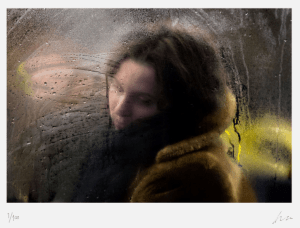
Through a glass darkly #36 ©Nick Turpin 2016

Title: On the Night Bus.
Photographer: Nick Turpin
Reference: ISBN 978-1-910566-16-9
First published:  2016 by Hoxton Press.
Web site: www.hoxtonminipress.com
Size:160mm x 228 x 17mm portrait format
Comprising: An introduction by Will Self followed by Photographers notes from Nick Turpin and then 49 colour plates

I’ve followed Nick on Twitter for a while. During that time there have been glimpses of the ‘Night Bus’ work. So, when I saw it was to be turned into a book and I could pre-order a ‘collectors’ copy and by so doing get a free print… Well, the hook had been baited and I took it. I purchased the collectors edition which is beautifully bound and cased with  a small loose leaf print included. My version is signed, being a pre-ordered edition.

The finished book more than lives up to the teasers on Twitter. Forty Nine colour plates of people travelling on night buses in London. The images are haunting with more than a little of Saul Leiter’s work  about them. Elegant use of colour and abstraction  produced with more than a little creativity by  this highly experienced and accomplished street photographer.

This is an absolute must for any photobook collectors shelves. Go buy it whilst it’s still in its ‘first edition’.

PDBarton November 2016