Latest Posts

coffee-shop-birmingham

Those quiet moments in coffee shops…

Coffee shops, or coffee houses as they were first known, spread to England from the middle east in the 1600’s. Hundreds of them sprung up in several cities across the country. They quickly became popular as a place to conduct business and to socialise as an alternative to the ubiquitous alehouses and taverns which proliferated at the time. Nobody back then drank water as most was not potable. Alehouses served weak beer in which the alcohol had killed the bacteria in the water from which it was made. Likewise, coffee houses used only boiling water to make their beverages. The action of boiling water for tea or coffee killed off the many bugs in the water.

It was possible during that period to gain access to a coffee house by payment of one penny. You could stay as long as you liked and there was no need to even buy coffee. They were places of commerce where some businessmen would conduct their business. I say “business-man” as women weren’t allowed in coffee houses unless they owned or worked in them. There was no obligation to provide board and lodging or food, unlike taverns so they were more like gentleman’s clubs.

Their reputation for commerce grew. Some coffee houses were frequented by specialist, lawyers, theologians, merchants etc. And some went on to become the foundations of today’s centres of commerce, for example,  Lloyds of London started in Edward Lloyds coffee house in Tower St London.

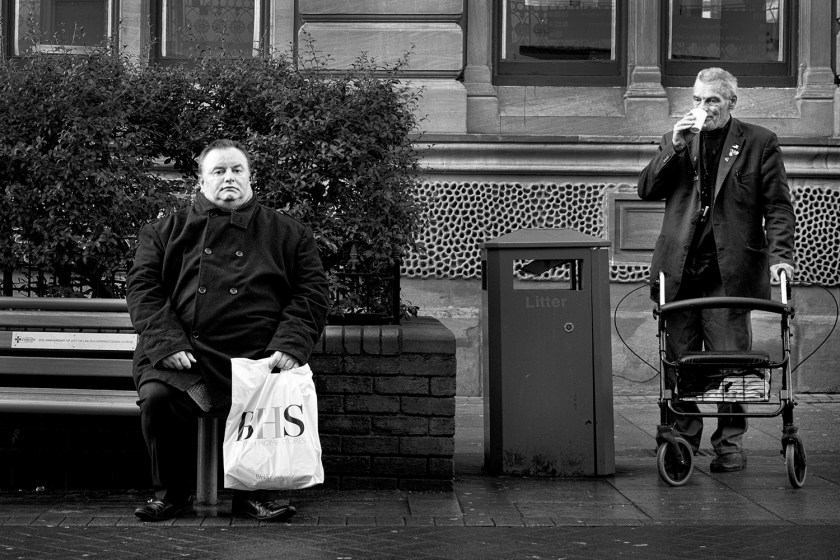
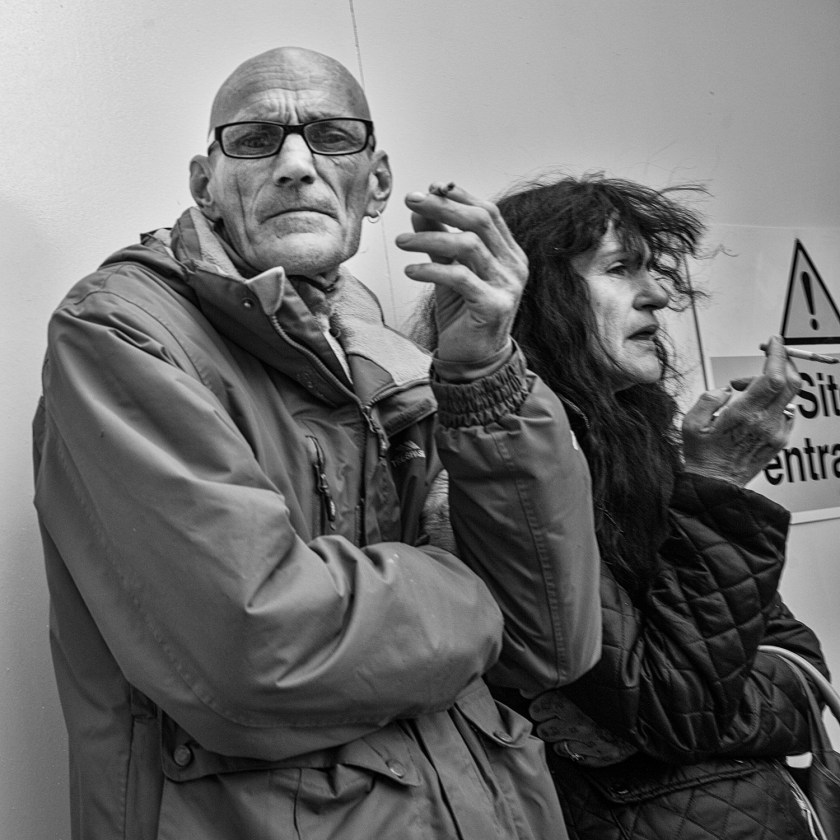
Today the pace of life is frantic; rarely do you see people just sitting spending time to themselves. Smokers have the luxury of doing this. Just standing having a cigarette. Spending quiet time outside their places of work. I’ve always been envious of their solitary moments of quiet. Coffee shops provide the nearest us non-smoking city dwellers get to that peaceful moment, it’s this which appeals to me as a photographer.

Today we use the coffee shop as a place for meeting friends, reading newspapers or even to work, and of course to grab that ‘quiet moment’.

Just how much better are today’s cameras?

The image you see above was taken on a freezing cold, steel gray day which the UK seems to get under high pressure in the winter. Light levels are low and very flat.

It was under such trying conditions I decided to test a 1930’e Zeiss Ikon 515/2 camera.

The test subject was the city where I live, Lincoln in the East Midlands of England. Hardly the South of France on a sunny day but…

I used 400asa Ilford XP2 (c41 film) because I could take it into the local Snappy Snaps shop to get it processed quickly. I’m impatient you see.

For those who may be interested, the shot was hand-held with a shutter speed of 1/50th of a second and an aperture of f5.6 It barely froze the people who were walking.

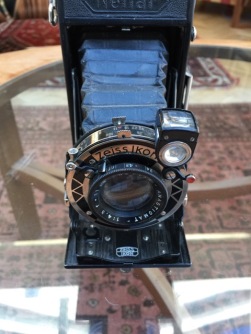
zeiss1This is the camera. It’s a folding camera with bellows separating the film and lens planes. It’s odd and clunky but despite being over 80 years old it’s still serviceable and still produces more than adequate images.
It has a focus ring, an aperture setting, and a speed setting. It has no autofocus, no distance rangefinder, and no exposure meter. You do all of that yourself. Yes, it’s very old school.

It takes 8 exposures each with a massive negative size of 60mm X 90mm on a roll of 120 film.

I’ve looked at the negatives through a 40x loupe. There is a slight softness to them but not enough to discount the images at all. In fact, that’s probably its charm.

Photographers of today seem to put too much emphasis on the ability for their cameras to produce images which are needle point sharp – as if that is all there is to photography. Yes, it’s important but sharpness is not the be all and end all. Was it Bresson who said, “Focus is such a Bourgois issue”?

To answer the question “Just how much better are today’s cameras?”… They are certainly easier to use, many requiring no input from the person other than to press the shutter release. They certainly produce consistently well-exposed images with their inbuilt metering systems, and, of course, the autofocus will do that job for you too.

But you can see the image quality of an 80-year-old mid range camera isn’t bad, though of course, lenses have improved too.

The answer is that modern day cameras have improved markedly from their aging grandfather’s. But, in doing so what have we lost? The skill and craftsmanship of the photographer perhaps?  Certainly, modern cameras can be very much point and shoot so if you press the shutter enough times you are going to get at least one shot which is good, so from that standpoint, I would argue yes, the skill levels required have diminished.

Lastly, I noticed an odd thing… nobody took any notice of me at all. With a modern camera pointed at them people become prickly. But with this, I was invisible.

Go and buy an old camera (with a good lens) and run a roll of film through it. You may get surprised by the results.

And we haven’t even started on film versus pixels…

Let’s not go there.


Sabine Weiss

Editorial: Sabine Weiss. The last humanist Photographer.

portrait-sabine-weiss-1954

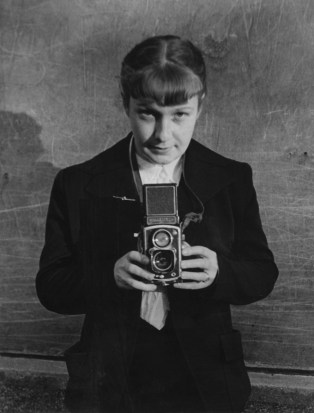
Sabine Weiss

“Born in  Switzerland in 1924  Weiss has been dubbed “The Last of the Humanists”, and even though she is getting tired of the label, she admits that it is somewhat fitting.” 

Read the excellent piece by Time magazine on the life of this wonderful photographer.

Her website (in French)

Pictures in the Peter Fetterman gallery website.

Biography on ‘All about Photography’ website.

The Usher Gallery, Part of the Collection.

Exhibition Review: It’s art but is it photography?

New Photographic works.
The Usher Gallery,
Part of The Collection,
Danes Terrace,
Lincoln. LN2 1LP.
T:01522-550965
W: thecollectionmuseum.com
Opening hours: See website.

This exhibition by James E Smith comprises 2 parts.
First is Call to Action, a series of black and white photographs from his time in Australia. The images are simply hung.
Second is Half the Battle is Knowing What Sells, a small book shown in the middle of the gallery. This second part of the exhibition is not covered in this review; though, in passing, it comprises e-mails received by Smith concerning briefs given for commercial advertising purposes. You can download the book here free under the creative commons license. Judge for yourself.

New Photographic works by James E Smith

New Photographic works by James E Smith

I am from a commercial world and this poses some difficulties in the understanding of “art” per se. In a discussion with a  photographic artist recently (we were talking about an event I had attended the day before which included him and a group of other artists) I wrote:-
“The terms of reference used by artists and those in commerce are more than a little different. The touchstones I have been used to, those of client orientated transactions, profit, efficiency etc were just not present in the discussions you were all having about the analysis of process. And, as I asked, is that the fundamental schism between the arts and commerce? “

So, you can see I am relatively blind as to what pure art, particularly that which relies upon description to be properly appreciated, really means. I confess to being lost in this exhibition.

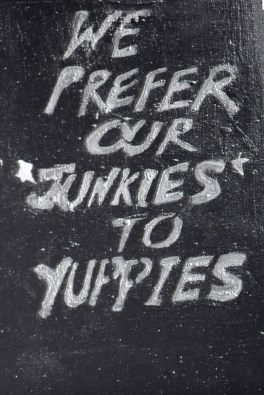
We prefer our Junkies to Yuppies

We prefer our Junkies to Yuppies ©James E Smith

I thought at first it was an exhibition of photographs. It isn’t; not in the usual sense at least. To me, it’s more an art installation using photographically produced images as an immersive geometric collage, so to speak, to give a feel, a smell, a flavour, of the “Constantly evolving human-altered landscape” seen by the artist, as the gallery puts it.

Of the many images in this show, there were few, if any, which would stand individually. There were no images which I thought of as elegant, well-formed and with a message. The printing of the images was flat, ordinary, and utterly devoid of appeal. As indeed was the hanging. There was little or no quality on display. Perhaps that’s as intended.

As a group, I could see the worth. The complete works said much about how Smith perceived Australia and Australians.

Smith describes the work as a “disjointed, witty, bizarre and at times disturbing take on what often gets referred to in mainstream media as ‘the current climate’

For me, disjointed sums it up. As for the rest… I’m obviously an insensitive soul.

You can see here on his website James E Smith is more a fine artist who uses different media to produce his art and his installations, even performances.


Images from The Lawn Asylum Lincoln. (Deliberately blurred)

Images from The Lawn Asylum Lincoln. (Deliberately blurred)

Running alongside Smith’s work is a small showing of pictures from the photographic archive of the Lawn Asylum, one of Lincoln’s old mental hospitals dating back to the 1800’s.

Interesting though these images are – touched by the magic of times past – the relevance to Smith’s works was somewhat tenuous, stretching the point too far for me. I saw no connection, not even in juxtaposition.

We should not exhibit pictures of the afflicted, no matter how old the images or whether we know the patient’s names or not. Nor for ‘art’s’ sake. Wrong on so many counts.


You can begin to understand perhaps why I’ve reversed the age old question of – It’s photography but is it art? – as the title of this blog. Or, are those semantic boundaries just too rigid to adequately describe photographic works at all? Art and photography are both broad churches.

I’m guessing my reaction to this show answers the question I have been asking myself for many years. Am I an artist? Clearly, I am not. And, I should stop wrestling with those thoughts and just get on taking pictures. And so should you.

P.S. In a recent interview David Bailey CBE was asked about art and photography. His reply was typically graphic.

“Is photography art? Of course it’s fucking art.”