
The English: Lincoln February 2017
An image from a series on Englishness. A cafe in Lincoln
An image from a series on Englishness. A cafe in Lincoln

Chicago ©PDBarton 2017.


Coffee shops, or coffee houses as they were first known, spread to England from the middle east in the 1600’s. Hundreds of them sprung up in several cities across the country. They quickly became popular as a place to conduct business and to socialise as an alternative to the ubiquitous alehouses and taverns which proliferated at the time. Nobody back then drank water as most was not potable. Alehouses served weak beer in which the alcohol had killed the bacteria in the water from which it was made. Likewise, coffee houses used only boiling water to make their beverages. The action of boiling water for tea or coffee killed off the many bugs in the water. It was possible during that period to gain access to a coffee house by payment of one penny. You could stay as long as you liked and there was no need to even buy coffee. They were places of commerce where some businessmen would conduct their business. I say “business-man” as women weren’t allowed in coffee houses unless they owned …

The image you see above was taken on a freezing cold, steel gray day which the UK seems to get under high pressure in the winter. Light levels are low and very flat. It was under such trying conditions I decided to test a 1930’e Zeiss Ikon 515/2 camera. The test subject was the city where I live, Lincoln in the East Midlands of England. Hardly the South of France on a sunny day but… I used 400asa Ilford XP2 (c41 film) because I could take it into the local Snappy Snaps shop to get it processed quickly. I’m impatient you see. For those who may be interested, the shot was hand-held with a shutter speed of 1/50th of a second and an aperture of f5.6 It barely froze the people who were walking. This is the camera. It’s a folding camera with bellows separating the film and lens planes. It’s odd and clunky but despite being over 80 years old it’s still serviceable and still produces more than adequate images. It has a focus ring, …

Title: On the Night Bus. Photographer: Nick Turpin Reference: ISBN 978-1-910566-16-9 First published: 2016 by Hoxton Press. Web site: www.hoxtonminipress.com Size:160mm x 228 x 17mm portrait format Comprising: An introduction by Will Self followed by Photographers notes from Nick Turpin and then 49 colour plates I’ve followed Nick on Twitter for a while. During that time there have been glimpses of the ‘Night Bus’ work. So, when I saw it was to be turned into a book and I could pre-order a ‘collectors’ copy and by so doing get a free print… Well, the hook had been baited and I took it. I purchased the collectors edition which is beautifully bound and cased with a small loose leaf print included. My version is signed, being a pre-ordered edition. The finished book more than lives up to the teasers on Twitter. Forty Nine colour plates of people travelling on night buses in London. The images are haunting with more than a little of Saul Leiter’s work about them. Elegant use of colour and abstraction produced with more than …

This excellent review by John Meehan kicks off a series of posts by guest publishers. Hardcover: 224 pages Images: 209 duotones Publisher: Yale University Press (4 Oct. 2016) Language: English Product Dimensions: 28.7 x 2.5 x 24.9 cm Price paid: £40.50 (from Amazon, UK) _________________________________________________________________ Lee Friedlander’s Street The Human Clay is the third in a projected six book series entitled ‘The Human Clay’ published by Yale University Press started in 2015. Each title in the series gathers together images of people grouped thematically. So far we have seen a volume on Children and one of Portraits.
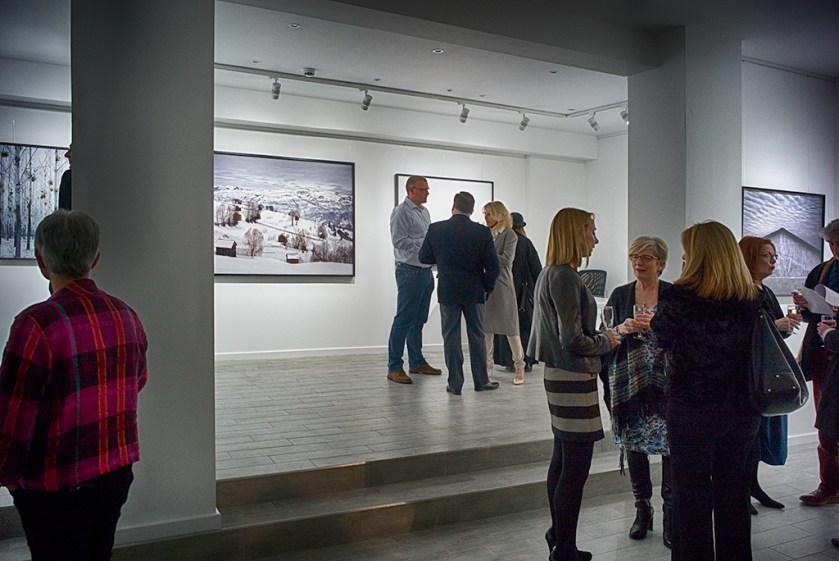
The Argentea Gallery opened for business in St Pauls Square in the heart of Birmingham’s Jewellery Quarter. Not, as you might think to sell jewellery but to exhibit contemporary photography. Set at the top of this refurbished 18th and early 19th century square with St Paul’s church at its centre the gallery fits in with re-purposing of the square’s fine buildings. It’s perfectly positioned to bring added culture to this fine square.

I saw a small piece recently that had a clip by Hunter S. Thompson on focusing too much on the “technicals of photography”. You can read it for yourself here… But this is the element which chimed with me… “When photography gets so technical as to intimidate people, the element of simple enjoyment is bound to suffer. Any man who can see what he wants to get on film will usually find some way to get it; and a man who thinks his equipment is going to see for him is not going to get much of anything” I’m probably going to upset colleagues when I say… “Don’t talk cameras. Use them”. I admit to once being beguiled by the equipment. Still, today, I collect cameras – of all types. I have dozens but I’m not really interested in them photographically. I just like old cameras. I shall be putting a few up on this blog from time to time just to share my obsession and to show, by comparison, I suppose, where we have come from and how we …
 peterdbarton.com