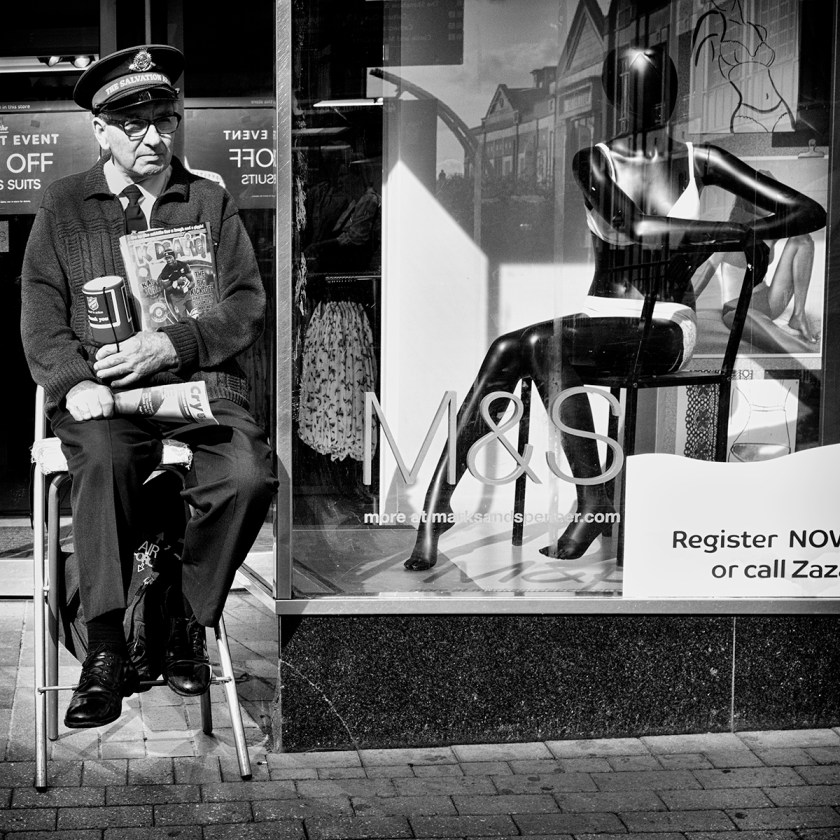
Street: Lincoln 2016
Lincoln ©PDBarton 2016
Lincoln ©PDBarton 2016
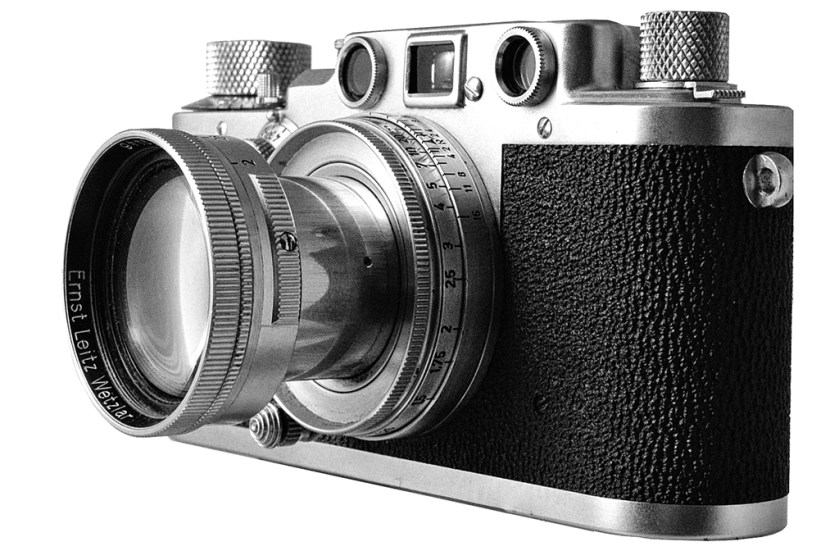
Remember: ‘Seeing’ is not about cameras. Tony Kubiak, a fine photographer I once knew told me “It doesn’t matter if you didn’t capture it, just so long as you saw it”. The “it” in question at the time was an image I was telling him about; one which I had failed to capture. Anyone involved in the practice of street photography – a subject notoriously difficult to precisely describe as the phrase means many things to many people – will tell you It’s important to carry a camera with you at all times. Some would argue the camera which really changed the way we approached street work is the camera in our mobile phones. And, I suppose, working on the old cliche of “the best camera for the job is one you have with you at the time” as we have our phones with us most of the time it follows that could be the case. Of course, the quality of the image from modern phones (written in 2016) is astounding which adds to the …
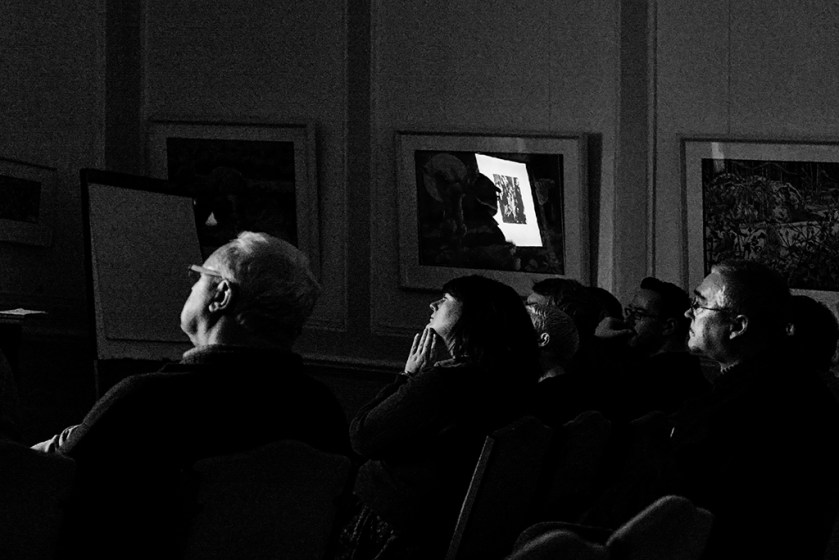
This event was an intimate seminar with Jim Mortram, famous for his “long-form” photographic essays about people living in his community in rural Norfolk. Jim Mortram produces strong black and white images, sometimes gritty, challenging, intimate even, but always considerate of the subjects. But I’m getting ahead of myself. Though a respected, working photographer, Jim remains a full-time carer for his disabled mother. Jim’s background makes him eminently qualified to understand the problems others are having in life. He says about his life and his work… “There is a slow erosion of everything you want to do in life. You become insular, cut off and isolated. I found a reason to stay alive. And I found it in my community. A friend gave me a camera. There was something about having a camera and doing something different that gave me a reason to be out.” The people Jim works with are the people in the community in which he lives.They live within 3 miles of his home. Jim explained to us about his own background …

Title: On the Night Bus. Photographer: Nick Turpin Reference: ISBN 978-1-910566-16-9 First published: 2016 by Hoxton Press. Web site: www.hoxtonminipress.com Size:160mm x 228 x 17mm portrait format Comprising: An introduction by Will Self followed by Photographers notes from Nick Turpin and then 49 colour plates I’ve followed Nick on Twitter for a while. During that time there have been glimpses of the ‘Night Bus’ work. So, when I saw it was to be turned into a book and I could pre-order a ‘collectors’ copy and by so doing get a free print… Well, the hook had been baited and I took it. I purchased the collectors edition which is beautifully bound and cased with a small loose leaf print included. My version is signed, being a pre-ordered edition. The finished book more than lives up to the teasers on Twitter. Forty Nine colour plates of people travelling on night buses in London. The images are haunting with more than a little of Saul Leiter’s work about them. Elegant use of colour and abstraction produced with more than …
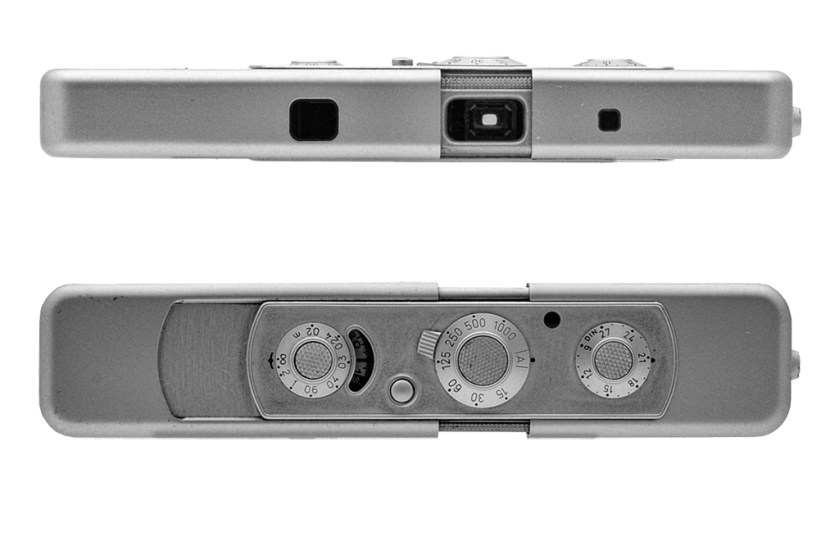
Minox was designed and first made in pre-war Latvia by Walter Zapp , a Baltic German. The company made cameras during the war finally moving to Wetzlar, Germany post war. Though originally designed as a camera for everyman, the high manufacturing cost moved it into the luxury camera market. Of course, we see it more now as a spy camera. Indeed it featured in many a spy film and in reality it was heavily used by secret services across the globe. It was a very small camera for its day with an excellent lens and close focus ability, making it perfect for document photography. The negatives being only 8mm X 11mm are tiny and could be easily hidden. The perfect spy camera in fact. The model shown here was made in the mid 50’s. It’s missing its carrying chain. The chain was a vital feature as it’s length was set at the perfect focusing length for document photography. The film comes in a cassette. It’s easy to load and unload. Because of the small size …

Jason Scott Tilley, a photographer from Coventry, first properly heard of Masterji from his daughter Tarla Patel, though he had seen him around previously as they shared the same processing house. Subsequently, working with Masterji and his daughter what Jason discovered was a photographer, previously little known outside of his own community in Coventry, together with a fascinating collection of pictures providing an insight into the migrant South East Asian community in Coventry reaching back into the 50’s. Maganbhai Patel, better known as Masterji migrated to Coventry from his native Gujarat, Indias most western state, in the 50’s. Keen to follow his passion for photography he set up a studio in his house and started to produce images of his family and friends within his community. You can read here the full background on Masterji written by the curator and producer of this exhibition, Jason Tilley. It’s a heartening story about one man’s passion for photography. The exhibition I visited -now closed – showed 100 or so prints, some in colour, of people in this …
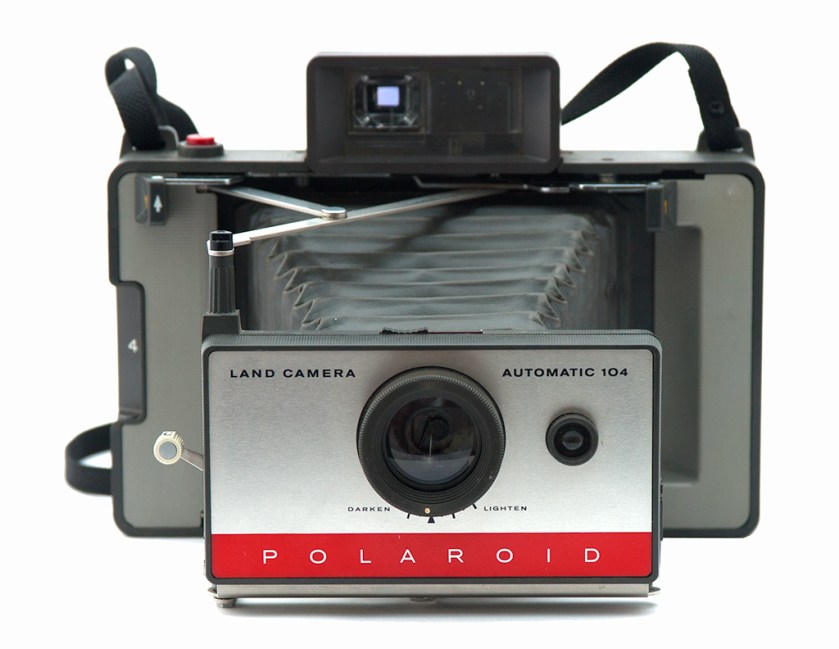
Polaroid photography has been around for as long as I have. The film was invented in 1947 and the first camera, the model 95, was released in 1948. The camera you see here, the Automatic 104, was released in 1965 and ran until 1967.

It’s hard to imagine but the magnificent digital cameras of today started out from this very humble Casio of 1995. Yes! 1995. Only 20 years ago. Odd too isn’t it the manufacturer of the first consumer digital camera with an LCD screen was more synonymous with calculators than with optical equipment. The Casio QV10, by todays standards was an appalling device. Many people accused it of being very badly designed with bad software and even worse results but, at the time it was the proof of concept that was required to take digital imagery forward. Yes, even by standards of the day the result compared very badly to even those from a cheap film camera. And the cost! I remember buying one and wondered at the time why I was wasting my money on something so bad and expensive. For it’s day, so formative and important was this camera that Japan’s National Museum of Nature and Science branded it as being… “Essential historical material for science and technology”. I remember being scoffed at by a …

Title: Humphrey Spender’s Humanist Landscapes Author: Deborah Frizzell ISBN: 0-300-07334-8 Softcover: 70 pages of introduction plus 100 plates Images: 100 Publisher: Yale centre for British art Language: English Product Dimensions: 28 x 1 x 23 cm Landscape format. As a precursor to Spenders images Frizzell, the author, discusses where the images sit in the panoply of images of the time and of the era in which they were made, providing, as she does, social and historic reference for the works. Some 70 excellent pages are taken up with this explanation. To set the scene: Spenders images span the decade 1932 – 1942. He came from a a middle class family in fashionable Kensington. His father, Harold was a Journalist and his mother Violet Schuster was a painter and poet. His brother Stephen, later to become Sir Stephen Spender, became a poet and essayist who concentrated on themes of social injustice and the class struggle in his work. Stephen Spender was close friends with many famous literary figures from the time i.e. WH Auden. Clearly the …

If I were to have only one of my images of India this would be it. I know it’s not too sharp and a it’s little grainy, but, this picture of modern schoolgirls around the pool of a Sikh Gudwara in Delhi encapsulates India for me. Yes there is tradition; Yes there is religion; Yes there is a vibrance of colour, but there is also modernity. Girls at school, in uniform, with schoolbags. I took the picture in 2007 on our first trip to India. It was made with an inadequate camera – at least judged by the fashion for ultra sharp images of today, but still it has an enduring quality. It tells a story, even in its singularity, of a nation moving forward. It tells of the importance of religion in this country of over 1.3 billion people, and, it gives a sense of the visual excitement I felt as a westerner. I know it’s not perfect but hey…it’s my wife’s favourite picture. Say no more.
 peterdbarton.com